








What's Happening?
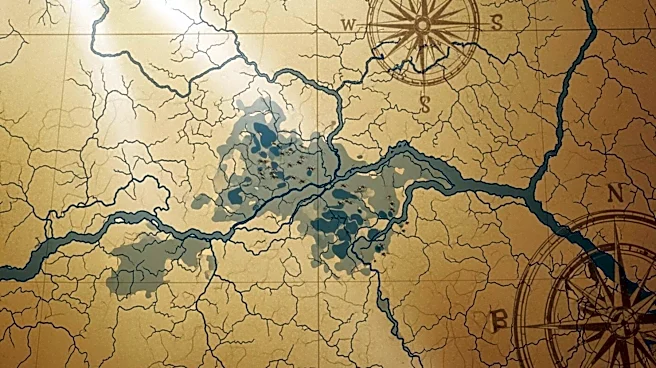
A new study published in Science Advances suggests that malaria significantly influenced the settlement patterns of early humans in Africa. Researchers used climate models to reconstruct historical environments and predict where malaria-carrying mosquitoes
would have thrived over the past 74,000 years. The study found that early human populations tended to avoid areas with high malaria risk, which shaped their settlement choices. Around 15,000 years ago, a genetic mutation providing some protection against malaria emerged, allowing humans to inhabit previously avoided regions. This research highlights the role of disease in shaping human history and settlement patterns.
Why It's Important?
Understanding the historical impact of malaria on human settlement provides insights into how diseases have shaped human evolution and migration. This research underscores the importance of considering disease as a factor in historical human behavior and settlement decisions. It also highlights the potential for genetic adaptations to influence human survival and expansion. These findings could inform current public health strategies, particularly as climate change affects the distribution of disease-carrying mosquitoes.
What's Next?
Further research could explore the interactions between humans and diseases throughout history, potentially uncovering other instances where disease influenced human evolution. As climate change continues to alter the habitats of disease-carrying mosquitoes, understanding historical patterns could help predict future disease risks and inform public health responses. Additionally, the study may inspire new approaches to managing diseases like malaria through genetic and cultural adaptations.