







What's Happening?
The Bonneville Power Administration (BPA), a federal agency within the U.S. Department of Energy, is actively recruiting Electrical Engineers for positions within its Transmission Services division. These roles focus on Transmission Planning, specifically
in areas such as Reliability Planning, Service Planning, Infrastructure Development Planning, and Capabilities Planning. Successful candidates will be tasked with performing a wide range of professional engineering studies and assignments related to high-voltage transmission networks. The job announcement outlines specific qualification requirements, including a bachelor's degree in engineering from an ABET-accredited program or a combination of education and experience demonstrating a thorough knowledge of physical and mathematical sciences underlying engineering. Specialized experience requirements vary by GS level, ranging from assisting with basic engineering tasks at the GS-9 level to planning and executing complex electrical studies and designs for high-voltage power lines, substations, or power plants at the GS-12 level. Applicants must be U.S. citizens and meet selective service registration requirements.
Why It's Important?
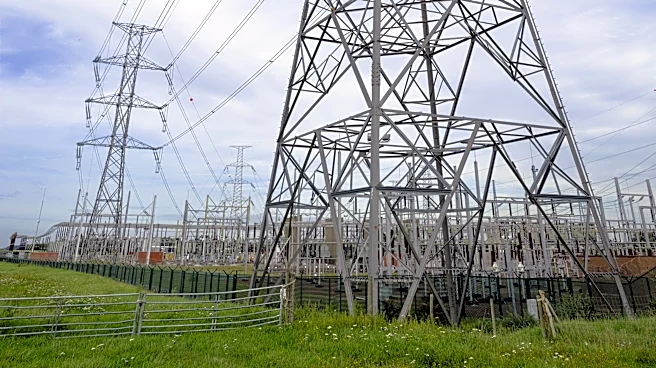
These engineering positions are crucial for maintaining and enhancing the reliability and efficiency of the U.S. electrical grid, particularly the high-voltage transmission networks managed by the BPA. The BPA plays a significant role in power transmission across the Pacific Northwest, making these roles vital for regional energy security and infrastructure stability. The recruitment drive highlights the ongoing need for skilled engineers to address the complexities of modern power systems, including grid modernization, integration of new energy sources, and ensuring resilience against various threats. The federal government's investment in these roles underscores its commitment to critical infrastructure and the continuous operation of essential services. The demand for specialized engineering expertise reflects the evolving challenges in energy transmission and the importance of robust planning and execution in this sector.
What's Next?
The recruitment process will involve a review of applications, including college transcripts and responses to short, free-response essay questions. Qualified candidates will proceed through the federal hiring process, which may include further assessments and interviews. New employees will undergo a preliminary background check before starting work. The BPA may authorize hiring incentives for highly qualified candidates, depending on budget availability and federal regulations. These new hires will contribute to ongoing projects aimed at improving the performance and reliability of the transmission grid. The agency's continuous need for such specialized talent suggests a sustained effort to bolster its engineering workforce to meet future energy demands and infrastructure challenges.
Beyond the Headlines
The continuous demand for electrical engineers in federal agencies like the BPA points to broader national priorities in energy infrastructure. This includes not only maintaining existing systems but also adapting to technological advancements and policy shifts towards cleaner energy. The emphasis on high-voltage transmission networks suggests a focus on long-distance power delivery and grid stability, which are critical for national energy independence and economic competitiveness. Furthermore, the detailed qualification requirements underscore the specialized knowledge and skills required to manage complex electrical systems, highlighting the importance of STEM education and professional development in engineering fields. The federal government's role as a significant employer in this sector also influences labor market trends and educational pathways for aspiring engineers.