


What's Happening?
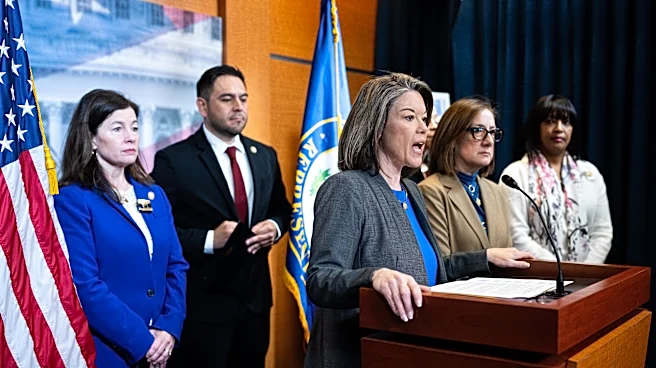
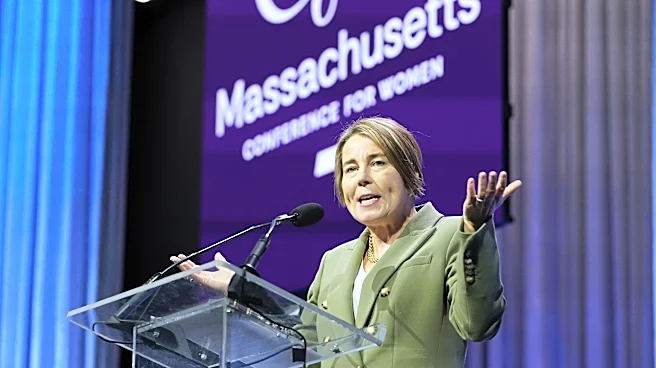
Massachusetts legislators are currently debating energy bills in both the House and Senate, aiming to address energy affordability and climate change. A key focus of these bills is reforming 'Basic Service,' the default electricity supply option provided
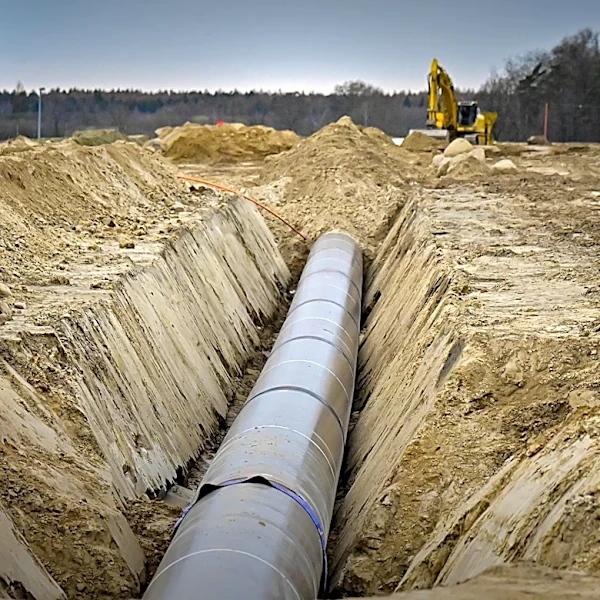
by utilities. Currently, Basic Service customers face higher premiums due to utilities' reliance on short-term contracts and limited power suppliers, leading to increased bills. Synapse Energy Economics estimates these premiums add $22 per month for residential customers. Both legislative chambers have included provisions to give utilities more flexibility in signing power supply contracts, which could reduce price volatility and dependency on a few suppliers. Additionally, both bills propose requiring major utilities to offer 'flexible interconnection' for clean energy projects, a method that has successfully boosted solar, wind, and battery installations in Texas by reducing connection costs.
Why It's Important?
The proposed energy legislation in Massachusetts is crucial for both consumer welfare and the state's climate objectives. By reforming Basic Service, the bills aim to lower electricity costs for residents, directly impacting household budgets and economic stability. The introduction of flexible interconnection is vital for accelerating the deployment of clean energy projects, which are essential for reducing carbon emissions and transitioning to a sustainable energy system. High interconnection costs currently hinder many promising renewable projects, and this reform could unlock significant clean energy capacity. The debate also highlights the tension between different policy approaches, such as the House's proposal to cut funding for the Mass Save program, which could undermine energy efficiency efforts and job creation in the clean energy sector.
What's Next?
The Massachusetts House and Senate must reconcile their respective energy bills to pass a unified piece of legislation. Key areas of negotiation will likely include the extent of reforms to Basic Service, the implementation details of flexible interconnection, and the future funding of energy efficiency programs like Mass Save. The outcome will determine the state's trajectory in energy affordability and climate action. If a comprehensive bill is passed, it could lead to lower electricity bills for consumers, a faster buildout of renewable energy infrastructure, and a more resilient grid. Conversely, failure to reach a consensus or the passage of a weakened bill could perpetuate high energy costs and slow progress towards climate goals.
Beyond the Headlines
The Massachusetts energy bill debate reflects a broader national challenge of balancing immediate economic concerns with long-term environmental sustainability. The issues of utility market structure, the role of short-term versus long-term energy contracts, and the barriers to renewable energy integration are systemic. The success of flexible interconnection in Texas suggests that innovative regulatory approaches can significantly impact clean energy adoption. However, the potential cut to Mass Save funding underscores the political complexities and trade-offs involved in energy policy, where short-term budget considerations can conflict with long-term strategic investments in energy efficiency and decarbonization. This legislative process will reveal the state's commitment to a holistic approach to energy, addressing both the cost burden on citizens and the imperative of climate action.