

What's Happening?
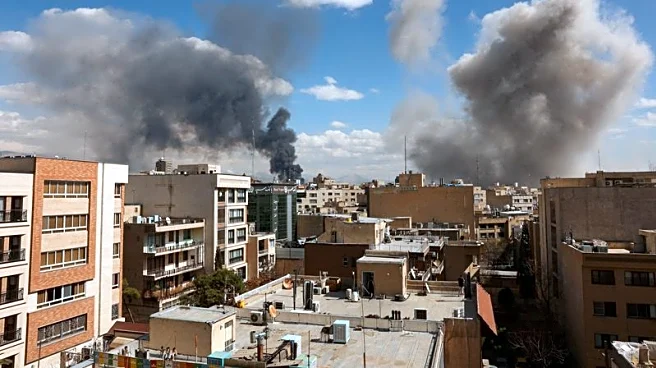
The US-Israeli military actions against Iran have escalated into a broader regional conflict, drawing varied international responses. European leaders are grappling with the implications of the strikes, balancing the defense of international law with maintaining
transatlantic relations. The European Union faces internal divisions over its approach to Iran, with some leaders advocating for a focus on post-conflict strategies. Meanwhile, China, a significant player in Middle Eastern geopolitics, is caught in a strategic bind due to its economic ties with Iran and the broader region. Russia's inability to support its allies, including Iran, highlights its geopolitical limitations. The UK is critical of the military action, comparing it to past conflicts, while Canada aligns cautiously with its allies. Argentina supports the strikes, influenced by its history with Iran-linked terrorism.
Why It's Important?
The conflict underscores the complex geopolitical landscape, with significant implications for international relations and regional stability. The EU's struggle to formulate a coherent strategy reflects broader challenges in maintaining a rules-based order while aligning with US policies. China's restrained response highlights its strategic dilemma, balancing economic interests with geopolitical realities. Russia's limited capacity to support allies reveals its constrained global influence. The UK's critical stance and Canada's cautious alignment illustrate the varied international perspectives on military interventions. Argentina's support, rooted in historical grievances, emphasizes the enduring impact of past conflicts on current foreign policy decisions.
What's Next?
The international community is likely to continue grappling with the fallout from the conflict. European leaders may seek to develop a unified strategy that addresses both legal and strategic concerns. China's future actions will depend on developments in the Middle East and its economic interests. Russia may attempt to leverage the situation to its advantage, despite its current limitations. The UK's position could evolve based on regional developments and domestic political considerations. Canada's focus will likely remain on diplomatic engagement and alliance commitments. Argentina may continue to support actions against Iran, influenced by its historical experiences.