







What's Happening?
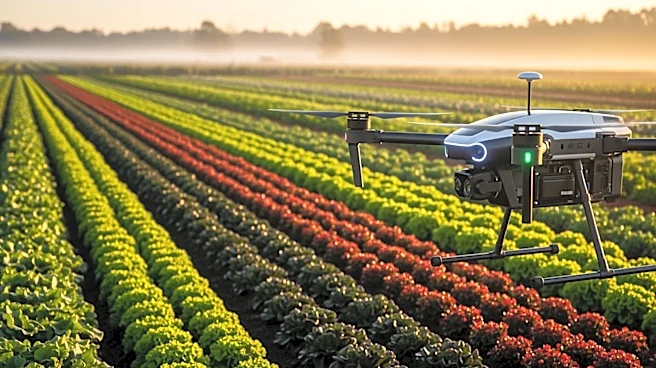
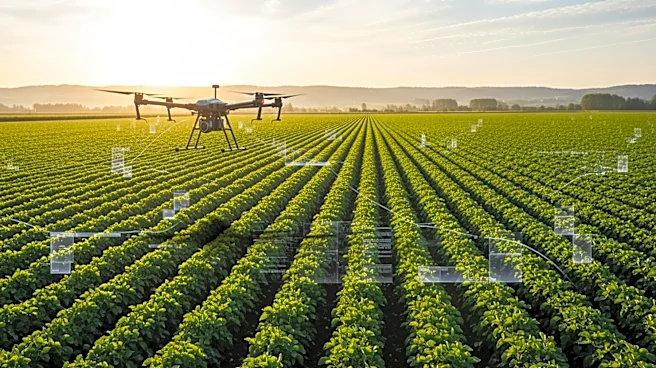
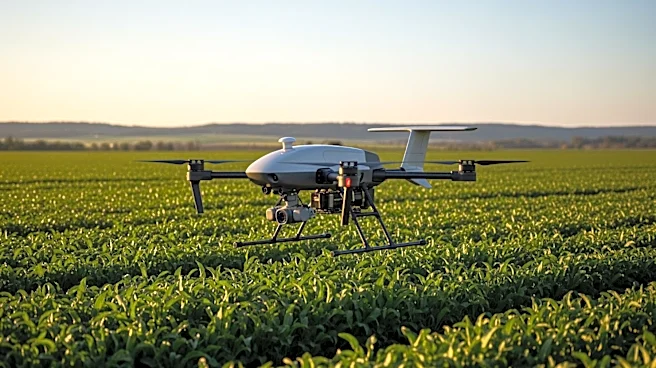
North Carolina State University is pioneering a project called Automating Intelligence from Research Stations (AIRS) to enhance agricultural data collection using drone technology. At the Sandhills Research Station, drones are deployed to collect images
and data from fields, which are then analyzed to improve agricultural practices. This initiative aims to make farming more data-driven, profitable, and sustainable. The project involves a collaboration between NC State University, the U.S. Department of Agriculture, and other partners. The collected data helps researchers develop strategies to address agricultural challenges, such as disease outbreaks and crop resilience, ultimately benefiting farmers and consumers.
Why It's Important?
The AIRS project represents a significant advancement in agricultural technology, offering a model for how data-driven approaches can transform farming practices. By utilizing drones for data collection, researchers can obtain precise and comprehensive information about crop conditions, leading to more informed decision-making. This technology has the potential to increase crop yields, reduce resource usage, and enhance food security. For the agricultural industry, such innovations are crucial in addressing challenges posed by climate change, population growth, and resource scarcity. The project's success could position North Carolina as a leader in agricultural innovation, attracting further research and investment.
What's Next?
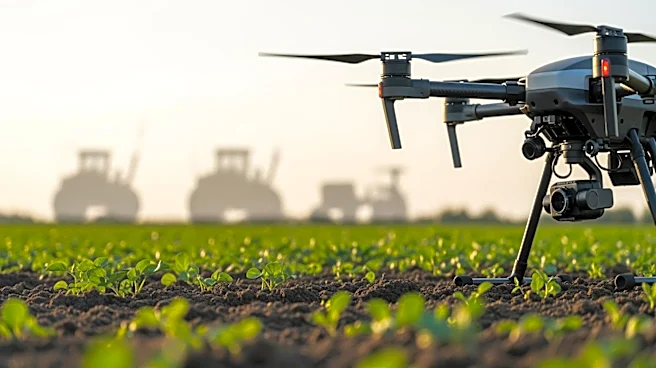
The next steps for the AIRS project include expanding the use of drone technology to other research stations across North Carolina. The project team plans to integrate ground-based robots and tractor-based imaging systems to further enhance data collection capabilities. As the technology becomes more widespread, it is expected to be adopted by farmers, leading to more precise and efficient agricultural practices. The project's expansion could also foster new collaborations with technology companies and research institutions, driving further advancements in agricultural technology. Ultimately, the goal is to create a comprehensive data archive that supports ongoing and future agricultural research.