






What's Happening?
The Horn of Africa is experiencing heightened geopolitical instability driven by Ethiopia's pursuit of sovereign sea access and its deteriorating relations with neighboring countries. Ethiopia, a landlocked nation since Eritrea's independence in 1993,
relies heavily on Djibouti for approximately 95% of its international trade. This dependence has spurred Ethiopia's strategic focus on diversifying its maritime connectivity since 2018. A significant development occurred in 2024 with the signing of a Memorandum of Understanding (MoU) between Ethiopia and Somaliland, which has further inflamed regional diplomatic and security engagements involving Egypt, Eritrea, and Somalia. This move is part of Ethiopia's broader strategy to secure direct access to the Red Sea, a critical maritime corridor connecting global trade routes. The situation is compounded by existing tensions over the Nile River, where Ethiopia advocates for equitable utilization of shared water resources, contrasting with Egypt's emphasis on historical water-use arrangements and downstream water security.
Why It's Important?
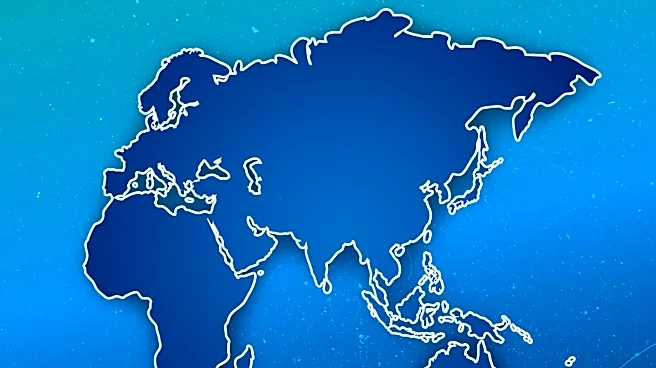
The escalating tensions in the Horn of Africa carry significant implications for regional stability and international trade. The Red Sea is a vital maritime corridor for global shipping, connecting Asia, Europe, and other regions via the Suez Canal. Disruptions in this area, as seen since 2023 due to security situations, can impact international trade, supply chains, and energy transportation, affecting both coastal and landlocked countries. Ethiopia's assertive stance on sea access challenges existing regional governance structures, particularly those centered on coastal states, and could lead to further militarization or diplomatic isolation. The paradox of Ethiopia advocating for equitable resource use in the Nile while seeking maritime access through arrangements that concern its neighbors highlights a complex interplay of sovereignty, economic interests, and regional security. This situation could strain humanitarian aid systems already stretched by crises in Sudan and other parts of the region.
What's Next?
The immediate future will likely see continued diplomatic maneuvering and potential escalations in the Horn of Africa. International and regional organizations such as the United Nations (UN), African Union (AU), and Intergovernmental Authority on Development (IGAD) are urged to adopt a coordinated yet differentiated approach to address the interconnected issues of the Nile and Red Sea. Recommendations include avoiding a siloed approach to these strategic spaces and institutionalizing an inclusive, three-tiered Red Sea governance structure. This proposed structure would grant coastal states primary roles, provide landlocked states with structured engagement opportunities on transit and trade, and allow international maritime powers to contribute to discussions on global navigation and security. The ongoing diplomatic engagements and the operational phase of the Grand Ethiopian Renaissance Dam (GERD) will also shape future interactions among Ethiopia, Egypt, and Sudan regarding Nile water management.
Beyond the Headlines
The situation in the Horn of Africa reflects deeper ethical and legal dimensions concerning the rights of landlocked states versus the sovereignty of coastal nations. Ethiopia's claim for sea access is rooted in Article 125 of the United Nations Convention on the Law of the Sea (UNCLOS), which recognizes the right of landlocked states to access and from the sea. However, the exercise of these rights is subject to agreements with transit states, creating a complex legal and diplomatic challenge. The differing interpretations of equitable participation and shared responsibility across the Nile Basin and the Red Sea highlight a fundamental regional governance dilemma. The long-term implications could include a redefinition of regional alliances, increased competition for strategic resources, and a potential shift in the geopolitical landscape of East Africa, impacting economic development and stability for millions.