





What's Happening?
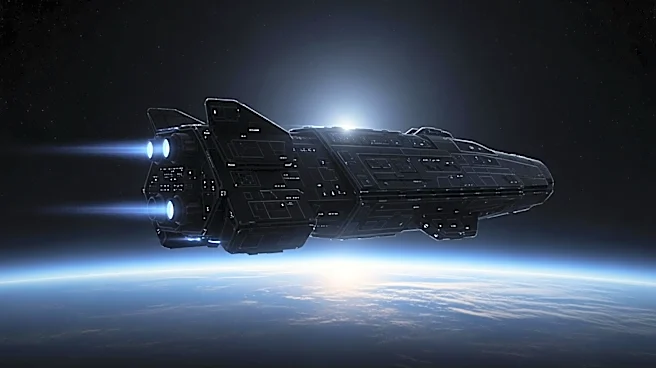
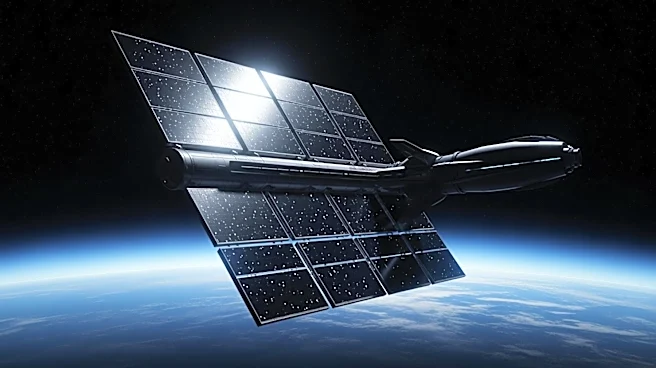
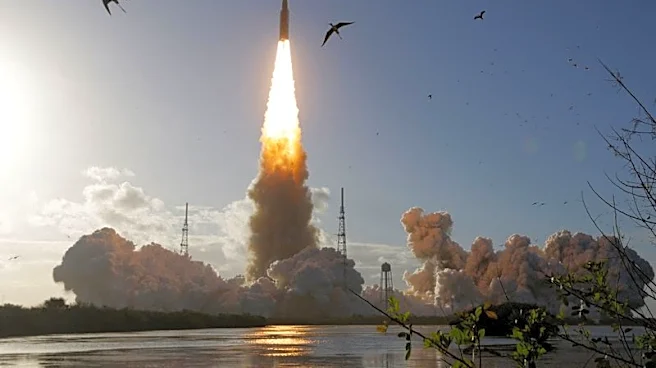
Northrop Grumman's Cygnus XL cargo spacecraft successfully deployed its solar arrays after launching from Cape Canaveral Space Force Station in Florida. The spacecraft, part of NASA's Northrop Grumman Commercial Resupply Services-24 mission, is en route
to the International Space Station (ISS). The deployment of the solar arrays is a critical step in ensuring the spacecraft's power supply during its journey. The mission aims to deliver essential supplies and scientific equipment to the ISS, supporting ongoing research and operations aboard the station.
Why It's Important?
The deployment of the Cygnus XL's solar arrays is crucial for the success of the resupply mission to the ISS. This mission supports the continuous operation and research activities on the ISS, which are vital for scientific advancements in various fields, including biology, physics, and earth sciences. The successful deployment also highlights the reliability of Northrop Grumman's spacecraft technology, reinforcing the company's role as a key partner in NASA's efforts to maintain and utilize the ISS as a platform for international collaboration and scientific discovery.
What's Next?
The Cygnus XL spacecraft is scheduled to arrive at the ISS, where NASA astronauts will use the Canadarm2 robotic arm to capture and install it on the station. The spacecraft will remain attached to the ISS until October, providing ample time for the crew to unload supplies and conduct experiments. NASA will continue to monitor the mission's progress and ensure the safe delivery of cargo. Future resupply missions are planned to maintain the ISS's operations and support its role in preparing for deeper space exploration missions.