




What's Happening?
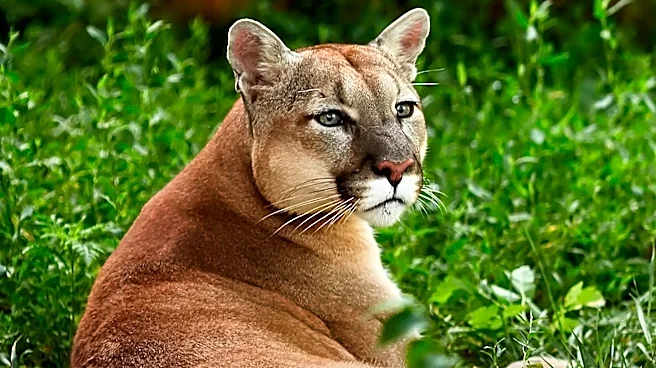
A mountain lion that was spotted in San Francisco’s Panhandle neighborhood over the weekend has safely moved on, according to city officials. The animal was seen perched in a tree near Fell and Baker Streets on Saturday night, prompting Animal Care and Control
officers to block off the area and issue safety alerts to nearby residents. Officials confirmed that the big cat did not display any aggressive behavior and left the park grounds on its own overnight. Wildlife experts noted that young mountain lions occasionally venture into urban areas like Golden Gate Park or the Presidio from the Peninsula, often in search of new territory and food after being displaced by older adults. Most of these animals eventually return to rural habitats without incident.
Why It's Important?
This incident highlights the increasing interaction between urban environments and wildlife, particularly as human populations expand into natural habitats. For San Francisco residents, the sighting of a mountain lion in a densely populated area raises awareness about local wildlife and the importance of coexisting with it. It also underscores the need for effective urban wildlife management strategies and public safety protocols. The peaceful resolution of this event, with the animal leaving on its own, demonstrates that such encounters can be managed without harm to either humans or animals, provided appropriate measures are taken. This event serves as a reminder of the ecological corridors that still exist, allowing wildlife to move through and sometimes into urban landscapes.
What's Next?
City officials and wildlife experts will continue to monitor for future mountain lion sightings and educate the public on how to react responsibly if an encounter occurs. The incident follows a similar sighting in January, where another young mountain lion was safely tranquilized and relocated from the city's Pacific Heights neighborhood to the Santa Cruz Mountains. This suggests that such occurrences, while rare, are not isolated and may become more frequent as urban development continues. Ongoing efforts will likely focus on public awareness campaigns and maintaining protocols for safe animal management, ensuring both human safety and the well-being of the wildlife.
Beyond the Headlines
The presence of a mountain lion in an urban park like the Panhandle points to broader ecological shifts and habitat pressures. As natural spaces shrink and become fragmented, wildlife is forced to adapt, sometimes leading them into unexpected territories. This situation prompts a deeper consideration of urban planning and conservation efforts, emphasizing the need to preserve and connect natural habitats even within metropolitan areas. It also raises ethical questions about human responsibility towards wildlife, particularly when animals venture into human-dominated spaces. The peaceful resolution of this event, without resorting to lethal measures, sets a positive precedent for future human-wildlife interactions in urban settings.