









What's Happening?
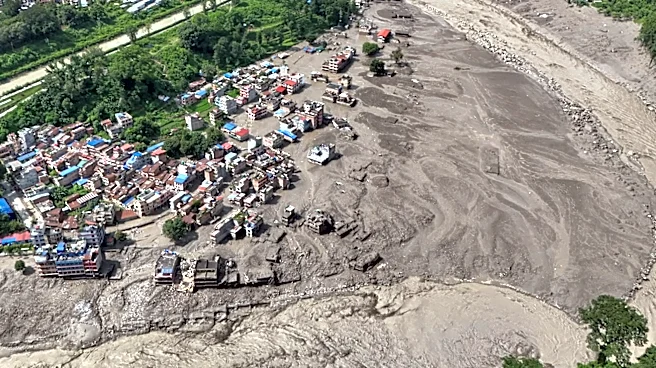
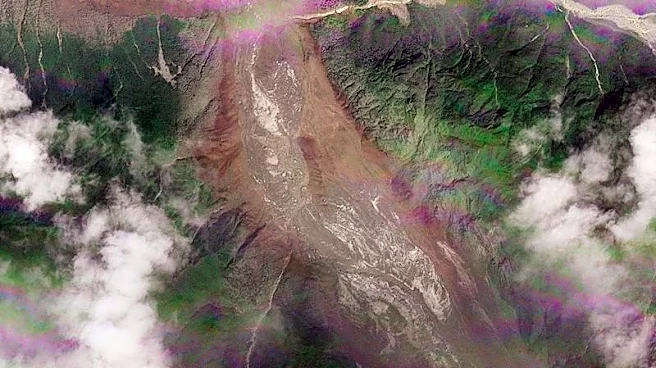
Serious flash flooding in Nepal's northern Rasuwa district, along the border with Tibet, has resulted in at least three American tourists being reported among a preliminary toll of 384 missing individuals. The Nepal Tourism Board released a statement
indicating that the missing include 291 foreign nationals and 93 Nepali nationals. The flooding occurred around 8:30 a.m. local time on Wednesday. The three American tourists were reportedly traveling with a Nepali company called Fishtail Tours and Travel, which has confirmed their missing status. Rescue operations are currently underway, with the Nepali Army deploying helicopters and disaster response personnel to the affected area. The flood has also caused significant damage to infrastructure, including roads and power facilities, and has reportedly inflicted casualties on the Chinese side of the border at the Gyirong crossing.
Why It's Important?
The incident highlights the significant risks faced by international tourists in regions prone to natural disasters, particularly in the context of increasing extreme weather events attributed to climate change. For the U.S., the reported missing Americans underscore the potential for its citizens to be caught in global crises, necessitating consular support and potentially influencing travel advisories for the region. The disruption to trade and transport between Nepal and China, particularly at the Gyirong port, could have broader economic implications for regional supply chains and local economies that rely on cross-border commerce. The damage to Nepal's power infrastructure, including hydropower and solar facilities, also points to the vulnerability of critical services in developing nations to such environmental catastrophes.
What's Next?
Rescue operations are ongoing, with efforts focused on locating the missing individuals and assessing the full extent of the damage. The Nepal Tourism Board and local authorities are working to verify the whereabouts and safety of all tourists and travelers in the affected areas. The Nepali Army has urged high vigilance and advised people to move to safe locations. Chinese President Xi Jinping has ordered all-out search and rescue efforts on the Tibetan side of the border. Further updates are expected as rescue teams gain more access to the devastated regions. The long-term recovery will involve rebuilding damaged infrastructure and potentially implementing enhanced early warning systems for future flood events.
Beyond the Headlines
This event underscores the growing humanitarian challenge posed by climate change, particularly in vulnerable mountainous regions like the Himalayas. The recurring nature of such floods, with a similar incident in the Bhote Koshi River last year, suggests a systemic issue that requires more robust preventative measures and international cooperation. The involvement of multiple nationalities among the missing highlights the global interconnectedness of tourism and the shared responsibility in disaster response. Beyond immediate rescue, there will be a need to address the psychological and economic impact on local communities, as well as the broader implications for regional stability and development in the face of escalating climate-related disasters.