


What's Happening?
Researchers at the University of Helsinki have uncovered a novel interaction between plant mitochondria and chloroplasts, revealing that mitochondria actively draw oxygen away from chloroplasts. This discovery, led by Dr. Alexey Shapiguzov, provides new
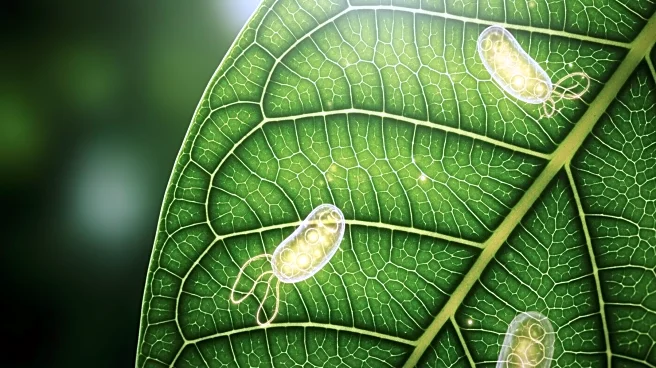
insights into how plants regulate oxygen within their tissues, which is crucial for plant metabolism, growth, and stress acclimation. The study utilized genetically modified Arabidopsis thaliana plants with mitochondrial defects to explore this interaction. These modifications led to increased mitochondrial respiration, which in turn reduced oxygen levels in plant tissues. The findings suggest that under stress, mitochondria can lower oxygen levels in chloroplasts, affecting photosynthesis and the metabolism of reactive oxygen species. This research adds a new dimension to the understanding of plant energy metabolism and stress response mechanisms.
Why It's Important?
The discovery of mitochondria's role in regulating oxygen levels within plant cells has significant implications for agriculture and plant biology. Understanding this interaction can help scientists develop crops that are more resilient to environmental stresses such as flooding or day-night transitions. By manipulating mitochondrial activity, it may be possible to enhance plant growth and stress tolerance, leading to improved crop yields. Additionally, this research opens new avenues for measuring and imaging plant physiology, which could aid in early stress detection and breeding programs. The ability to better understand and control plant metabolism could have far-reaching effects on food security and agricultural sustainability.
What's Next?
Future research will likely focus on further exploring the mechanisms behind this oxygen exchange and its impact on plant physiology. Scientists may investigate how these findings can be applied to other plant species and agricultural practices. There is potential for developing new crop varieties that leverage this interaction to improve resilience and productivity. Additionally, the study's insights could lead to advancements in plant imaging techniques, providing more precise tools for monitoring plant health and stress responses. As researchers continue to unravel the complexities of plant metabolism, these discoveries could contribute to more sustainable agricultural practices and enhanced food production.