



What's Happening?
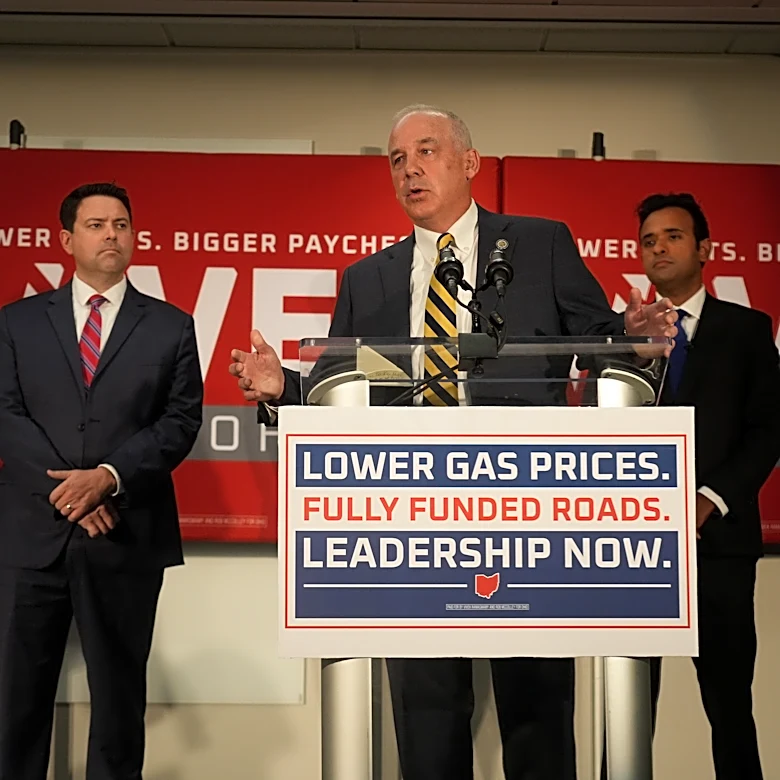
Rye Barcott, a U.S. Marine Corps veteran who served three tours in Iraq, has authored a new book titled 'Courage Can Save Us.' In this book, Barcott profiles ten military veterans—five Republicans and five Democrats—who he believes exemplify political
courage in their public service. Barcott is also the co-founder and CEO of With Honor, a cross-partisan organization dedicated to helping military veterans get elected across the country. His work addresses the current political climate, characterized by deep division, polarization, and a 'culture of contempt' in Congress, which has led to historically low approval ratings. Barcott argues that these veterans, through their willingness to seek commonalities and move beyond outrage-driven politics, offer valuable lessons for bridging America's political divide and finding common ground.
Why It's Important?
Barcott's book and his organization, With Honor, are significant because they directly address the pervasive issue of political polarization in the United States. By highlighting examples of courage and civility among military veterans from both major parties, he attempts to offer a tangible path forward for a country struggling with deep divisions. The focus on veterans is particularly impactful, as they often bring a unique perspective of service and a commitment to a cause greater than themselves, potentially fostering a more collaborative approach to governance. This initiative is important for U.S. society as it seeks to inspire a return to more constructive political discourse and problem-solving, moving away from the gridlock and animosity that currently define much of the political landscape. It suggests that shared values and a willingness to compromise can still be found, even in a highly partisan environment.
What's Next?
The release of 'Courage Can Save Us' is likely to spark discussions about the role of courage and civility in contemporary U.S. politics. Barcott and With Honor will likely continue to advocate for and support military veterans running for office, hoping to infuse Congress with more individuals who prioritize common ground over partisan conflict. The book's profiles could serve as case studies for aspiring politicians and a call to action for voters to support candidates who demonstrate these qualities. The ongoing efforts of organizations like With Honor will be crucial in determining whether the examples of political courage highlighted in the book can translate into a broader shift in political culture, potentially influencing future elections and legislative processes by promoting a more collaborative and less divisive approach to governance.
Beyond the Headlines
Barcott's work delves into the ethical and cultural dimensions of political leadership, suggesting that the values instilled through military service—such as selflessness, civility, and humility—are essential for effective governance. The book implicitly critiques the current political system, which often rewards confrontational tactics and partisan loyalty over collaboration. By presenting veterans as models of courage, Barcott challenges the notion that political success requires abandoning one's principles or succumbing to extreme partisanship. This initiative could contribute to a long-term cultural shift, encouraging a re-evaluation of what constitutes effective and ethical leadership in public service. It also raises questions about how to cultivate these qualities in non-veteran politicians and how to create a political environment that incentivizes courageous, cross-partisan cooperation rather than division.