




What's Happening?
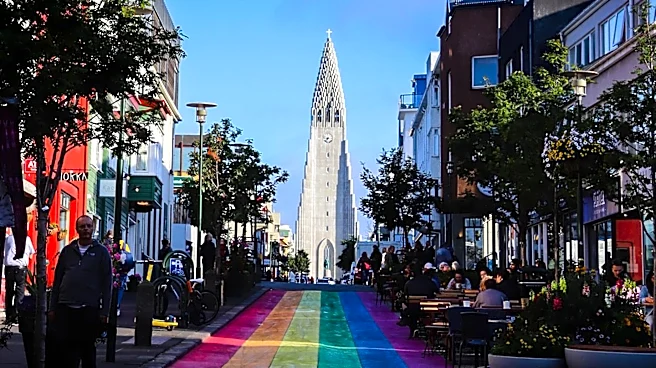
Austin Mayor Kirk Watson, alongside community leaders and officials, dedicated an LGBTQIA+ historical marker on West Fourth Street, just days after the city agreed to remove a rainbow crosswalk at the same intersection. The interpretive marker, titled
"As Queer As You Want To Be," recognizes the history, resilience, and contributions of Austin's LGBTQIA+ community. The dedication ceremony, attended by approximately 100 people, was described as defiant yet festive. The marker chronicles the historical isolation and vulnerability of gay individuals, early civil rights protests, and Austin's role in hosting the first National Gay and Lesbian Conference in 1971. It also acknowledges the evolution of social sensibilities and the impact of downtown development on the area. The removal of the rainbow crosswalk was a result of a directive from Governor Greg Abbott, who ordered the removal of roadway art associated with "political agendas" or "ideologies."
Why It's Important?
This event is important as it highlights the ongoing tension between state-level directives and local community efforts to recognize and celebrate LGBTQIA+ history and identity. The dedication of the historical marker, immediately following the removal of the rainbow crosswalk, symbolizes a resilient response from the Austin community and its leadership to perceived attempts at erasure. It underscores the significance of historical recognition for marginalized communities, providing a permanent physical testament to their presence and contributions, especially in the absence of traditional 'gayborhoods' in Austin. This act serves as a powerful statement against anti-LGBTQIA+ rhetoric and legal restrictions, reinforcing the community's determination to be seen and heard. It also brings to light the broader debate about local autonomy versus state oversight in cultural and social matters, impacting how cities can express their values and support their diverse populations.
What's Next?
The dedication of the historical marker is a significant step in preserving and celebrating Austin's LGBTQIA+ history. Community advocates, such as Garry Brown, a member of Austin's LGBTQ+ Quality of Life Advisory Commission, are now working towards further initiatives, including the potential closure of Fourth Street to traffic between Colorado and Lavaca streets to create a pedestrian plaza. This proposed "LGBTQ Bettie Naylor Memorial Park" aims to provide a safer environment and a dedicated space for community gatherings, celebrations, and art festivals. The event also coincided with Austin's annual Pride parade, indicating continued public engagement and celebration of the LGBTQIA+ community. The ongoing efforts suggest a sustained commitment from local leaders and community members to ensure visibility and support for the LGBTQIA+ population, despite external pressures.
Beyond the Headlines
The dedication of the historical marker, particularly in the context of the rainbow crosswalk's removal, reveals a deeper cultural and political struggle over public space and symbolic representation. The crosswalk, a temporary and visible symbol, was removed due to a state directive, while the historical marker, a more permanent and educational fixture, was established. This contrast highlights different strategies for asserting identity and memory in the face of opposition. The phrase "We will not be erased," proclaimed by community advocate Garry Brown, encapsulates the resilience and determination of the LGBTQIA+ community to maintain its presence and narrative. This event also underscores the evolving nature of LGBTQIA+ activism, moving beyond mere tolerance to demanding historical recognition and dedicated spaces. It reflects a broader societal conversation about who gets to define public memory and how marginalized histories are preserved and celebrated in the public sphere.