





What's Happening?
In a high-profile legal case, Utah prosecutors have presented video evidence allegedly showing Tyler Robinson, the accused in the assassination of conservative activist Charlie Kirk, in a sniper's position on a university campus rooftop. The video was
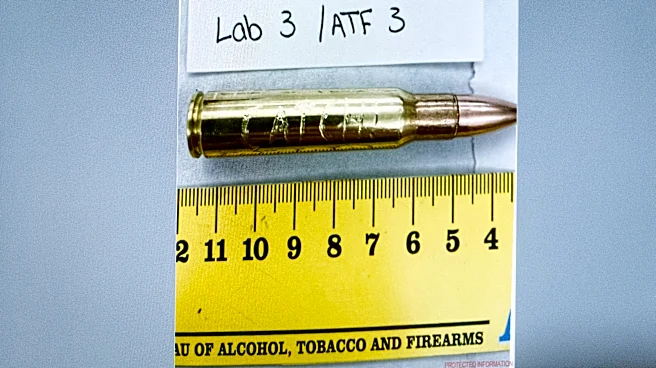
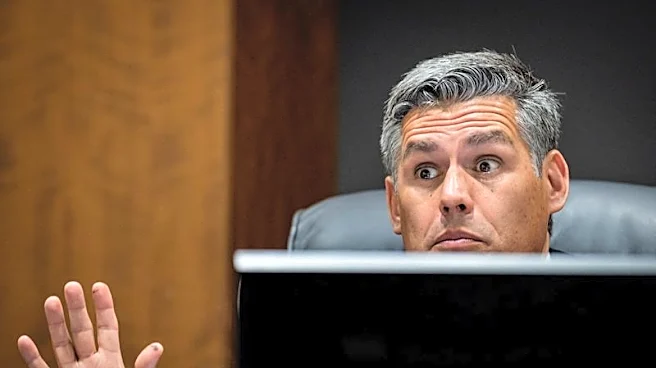
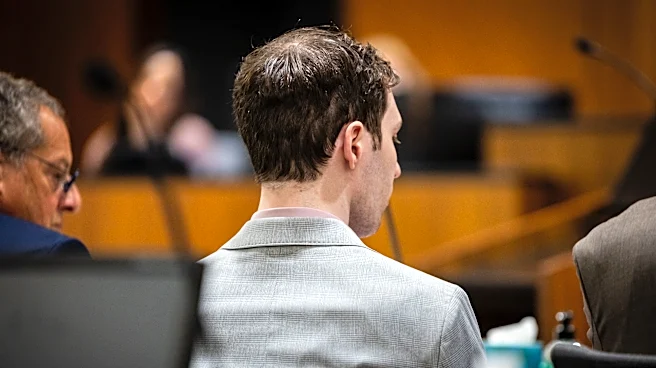
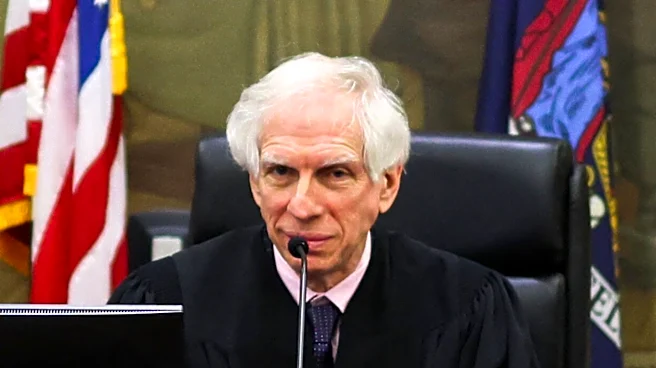
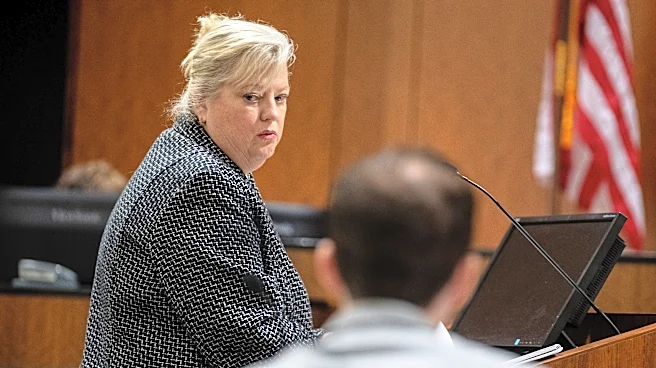
shown during a preliminary hearing in Provo, Utah, where prosecutors aim to convince District Court Judge Tony Graf to proceed with a trial against Robinson. The 23-year-old faces seven criminal charges, including aggravated murder, with prosecutors seeking the death penalty. The incident occurred on September 10, 2025, at Utah Valley University, where Kirk was shot while engaging in a debate with students. The case has drawn significant attention due to its implications on political violence in the U.S. Erika Kirk, the widow of Charlie Kirk, was present in the courtroom, having taken over leadership of Turning Point USA, the organization her husband co-founded.
Why It's Important?
The case underscores growing concerns about political violence in the United States, particularly against public figures with strong ideological stances. The assassination of Charlie Kirk, a prominent conservative activist, highlights the potential dangers faced by individuals involved in political discourse. The outcome of this case could set a precedent for how similar cases are handled in the future, especially regarding the use of the death penalty in politically charged crimes. Additionally, the case raises questions about the influence of political beliefs on violent actions, as prosecutors suggest Robinson's motives were linked to Kirk's conservative views on sexuality and gender. This trial could impact public policy discussions on political violence and the protection of public figures.
What's Next?
The preliminary hearing is expected to continue throughout the week, with further evidence and testimonies to be presented. The defense is likely to challenge the prosecution's evidence, particularly the reliability of DNA tests linking Robinson to the crime scene. The court's decision on whether to proceed to trial will be closely watched by political leaders, legal experts, and the public. If the case goes to trial, it could lead to broader discussions on the intersection of politics, violence, and the legal system in the U.S. The outcome may also influence security measures for public figures and events, especially those involving contentious political debates.