


What's Happening?
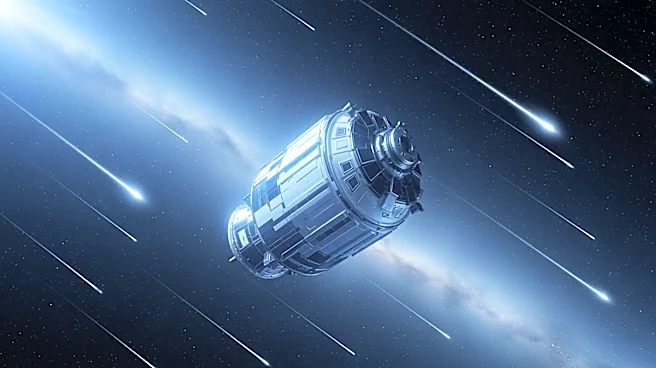
NASA, along with its partners, is actively assessing the risks posed by micrometeoroids to spacecraft during missions. These assessments focus on the micrometeoroid environment, which includes both sporadic background debris and more significant meteor showers.
According to Bill Cooke, lead of NASA's Meteoroid Environments Office, only a few of the over 1,000 known meteor showers, such as the Geminids, significantly exceed the sporadic background levels. The primary concern for space missions is meteor storms and outbursts, which can dramatically increase the amount of interplanetary debris in Earth's orbit. NASA estimates that approximately 48.5 tons of space debris enter Earth's atmosphere daily, ranging from tiny micrometeoroids to larger particles that create visible meteor showers.
Why It's Important?
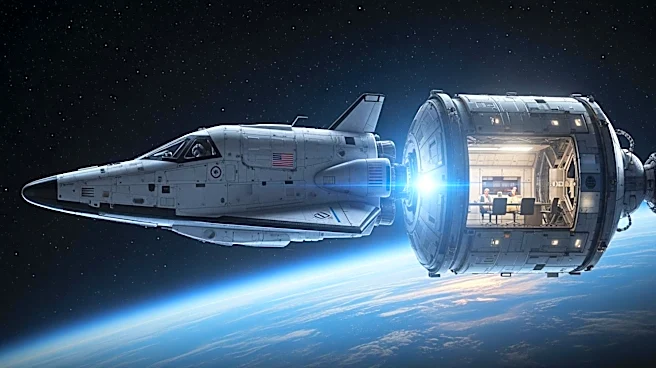
The potential impact of micrometeoroids on spacecraft is a significant concern for NASA and other space agencies. These particles travel at high speeds, averaging 35,420 km/h, and can cause substantial damage if they collide with a spacecraft. Such impacts could puncture or dent the spacecraft's hull, damage critical systems, or even lead to catastrophic failures. For instance, a micrometeoroid could breach the heat-resistant tiles of a spacecraft like Orion, compromising its ability to withstand reentry temperatures. Understanding and mitigating these risks is crucial for the safety and success of future space missions, particularly as space exploration efforts continue to expand.
What's Next?
NASA and its partners will continue to monitor and assess the micrometeoroid environment to develop strategies for mitigating risks to spacecraft. This includes designing spacecraft to withstand potential impacts and implementing safety measures during meteor storms. As space missions become more frequent and ambitious, ensuring the safety of spacecraft from micrometeoroid impacts will remain a priority. Future developments in spacecraft design and materials may further enhance the ability to withstand such impacts, contributing to the overall safety and success of space exploration missions.