










What's Happening?
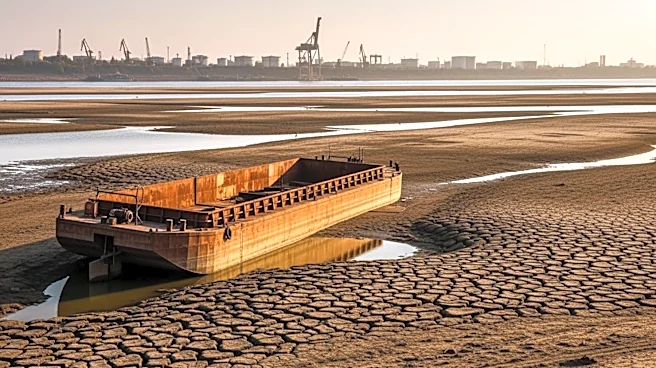
A significant heat wave in Western Europe is causing the Rhine River's water levels to drop, severely impacting fuel shipments. Barges transporting diesel through Kaub, Germany, a crucial point on the river, are now limited to carrying only about 1,070
tons of cargo, which is approximately 45% of their full capacity. The German Federal Waterways and Shipping Administration forecasts that the water level will decrease further, potentially reaching 83cm by Friday. The Rhine is a vital trade route, with petroleum products making up over a fifth of its cargo. As water levels continue to fall, the capacity of barges is expected to decrease further, exacerbating the strain on regional fuel supply chains already disrupted by conflicts in the Middle East. Additionally, shipping costs have surged, with freight rates for petroleum products between the Amsterdam-Rotterdam-Antwerp hub and Basel rising to nearly €50 a ton.
Why It's Important?
The declining water levels of the Rhine River have significant implications for the fuel supply chains in Western Europe. The Rhine is a critical artery for transporting petroleum products, and the reduced barge capacity is likely to lead to supply shortages and increased costs. This situation is compounded by existing disruptions due to Middle East conflicts, which have already strained supply chains. The rising shipping costs could lead to higher fuel prices, affecting industries and consumers across the region. The situation highlights the vulnerability of supply chains to environmental changes and geopolitical tensions, underscoring the need for resilient infrastructure and diversified supply routes.
What's Next?
If the Rhine's water levels continue to drop, further reductions in barge capacity are expected, which could exacerbate fuel shortages and increase costs. Stakeholders, including governments and businesses, may need to explore alternative transportation methods or routes to mitigate the impact. Additionally, there may be increased pressure on policymakers to address the underlying causes of such environmental changes, including climate change, to prevent similar disruptions in the future. The situation may also prompt discussions on improving infrastructure resilience and diversifying supply chains to reduce dependency on single routes.