
What's Happening?
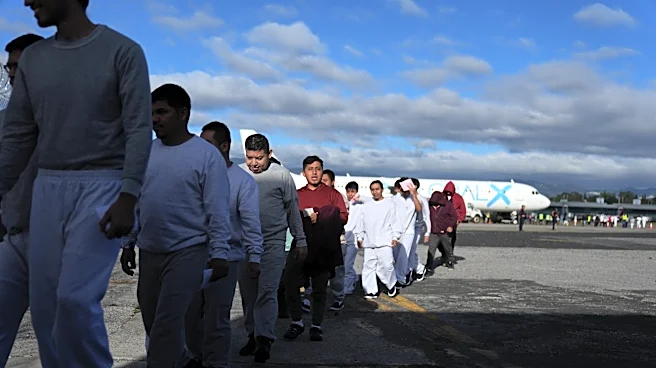
The first group of U.S. deportees, part of an expected 1,200, has arrived in Monrovia, Liberia, from the United States. This marks an expansion of the President Trump administration's policy of third-country
deportations, where foreign nationals are sent to countries that are not their own. The inaugural flight carried 20 individuals, primarily from Latin American countries such as Venezuela and Cuba. This follows an agreement between the U.S. and Liberia, announced earlier this week, which will facilitate the transfer of up to 1,200 deportees over the next year. Since taking office for a second term in 2025, President Trump has entered into agreements with at least 35 countries to accept third-country deportees, according to the nonprofit Human Rights First. These agreements have sometimes involved financial aid and trade deals, with Senate Democrats estimating at least $40 million spent on such deals in the first year of President Trump's second term. Liberia, for instance, received $5 million this year for 'migration management activities,' though its Ministry of Information denies financial motives for the agreement.
Why It's Important?
This policy significantly alters the landscape of U.S. immigration enforcement and international relations. For the U.S., it represents a strategy to manage immigration flows and potentially deter illegal immigration by making it more difficult for individuals to remain in the country, even if their home countries are unwilling to accept them. The financial incentives offered to participating countries, such as Liberia, highlight the economic dimension of these agreements, potentially creating new avenues for U.S. foreign aid and diplomatic influence. However, the practice raises significant human rights concerns, as critics question whether smaller nations are being used as 'dumping grounds' and if deportees will have adequate access to resources and legal protections in unfamiliar environments. The policy's impact on the lives of deportees, who may be stranded in countries where they do not speak the language or have social ties, is a critical humanitarian issue.
What's Next?
The U.S. is expected to continue implementing and potentially expanding its third-country deportation agreements with other nations. The arrival of more deportees in Liberia and other participating countries will likely lead to increased scrutiny from human rights organizations and international bodies regarding the treatment and welfare of these individuals. Liberia has stated that deportees will be allowed to apply for asylum and are free to leave the country, with assistance from the International Organization for Migration and the United Nations refugee agency. However, the practical challenges of integrating a large number of foreign nationals into a new country, particularly those with limited resources, remain to be seen. The policy's effectiveness as a deterrent to illegal immigration will also be closely monitored, as will the diplomatic and financial implications for both the U.S. and the receiving countries.
Beyond the Headlines
The expansion of third-country deportations under the President Trump administration reflects a broader shift in global migration policies, where countries increasingly seek to externalize their immigration challenges. This approach raises fundamental questions about national sovereignty, international law, and the ethical responsibilities of states towards migrants and asylum seekers. The historical context of Liberia, founded as a refuge for freed slaves, adds a complex layer to its current role in accepting deportees, prompting discussions about historical obligations and contemporary humanitarianism. Critics argue that such policies can undermine the principles of asylum and create a system where vulnerable individuals are further marginalized. The long-term societal and economic impacts on the receiving countries, particularly those with developing economies, also warrant deeper consideration, as they grapple with the challenges of integrating new populations while potentially facing accusations of complicity in human rights abuses.