








What's Happening?
Federal officials have initiated emergency measures to stabilize Lake Powell's declining water levels, a move that could have long-term consequences for ecosystems and communities in the Colorado River Basin. The U.S. Bureau of Reclamation (USBR) announced
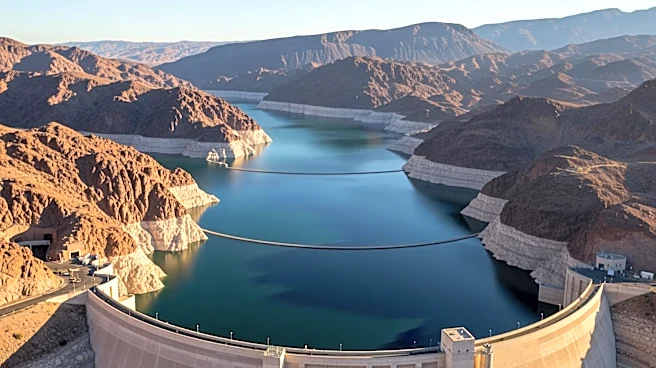
plans to release water from the Flaming Gorge Reservoir and reduce downstream releases to Lake Mead. This strategy aims to prevent Lake Powell from falling below critical thresholds necessary for hydropower generation at Glen Canyon Dam. However, experts warn that this could strain future water supplies, disrupt local economies, and impact fish populations. The Colorado River, which supports over 40 million people and irrigates millions of acres of farmland, is experiencing severe drought conditions, with storage levels at about 36 percent capacity.
Why It's Important?
The stabilization efforts at Lake Powell are crucial for maintaining hydropower generation and water supply in the region. The Colorado River is a vital resource for seven U.S. states and Mexico, and its declining levels pose significant risks to water and power infrastructure. The USBR's actions are intended to mitigate these risks, but they also highlight the challenges of managing water resources amid prolonged drought and climate change. The reduction in water releases to Lake Mead could decrease Hoover Dam's power-generating capacity, affecting electricity prices and availability. Additionally, the move could impact recreational activities and local economies dependent on water resources.
What's Next?
The USBR plans to continue monitoring water levels and adjust releases as necessary through 2027. Stakeholders, including state water commissioners and environmental groups, are likely to engage in discussions about sustainable water management practices. The situation underscores the need for long-term solutions to address water scarcity and climate change impacts. Future negotiations among the basin states will be critical in developing new water-sharing agreements to replace those expiring this year.
Beyond the Headlines
The emergency measures at Lake Powell could have broader implications for water management policies in the U.S. The reliance on crisis management strategies highlights the need for more sustainable, supply-driven operations. The potential impact on fish populations, particularly the kokanee salmon in Flaming Gorge Reservoir, raises ecological concerns. The situation also emphasizes the importance of addressing infrastructure constraints at Glen Canyon Dam to ensure effective water release and management.