




What's Happening?
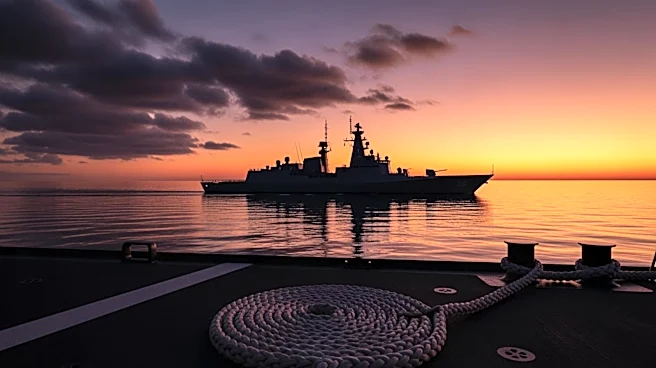
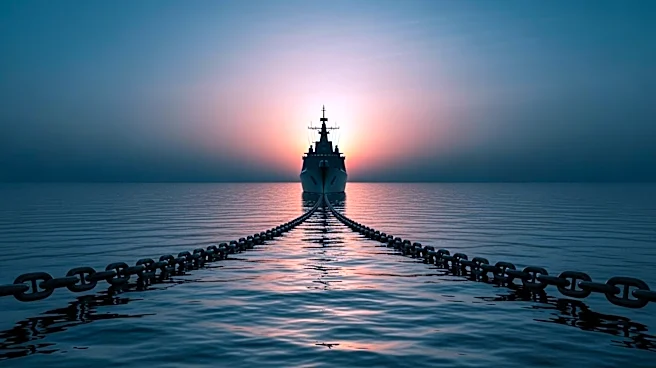
The United States has announced a naval blockade on Iran, targeting its ports to exert economic pressure and bring Iran back to the negotiating table. This move follows a six-week military campaign by U.S. and Israeli forces that failed to force Iran into
submission. The blockade aims to disrupt Iran's energy exports through the Strait of Hormuz, a critical channel for global oil trade. President Trump has stated that the blockade is a strategic shift to apply economic pressure rather than continuing military strikes. The U.S. hopes to gain leverage in future negotiations by making Iran's economic situation more challenging.
Why It's Important?
The blockade represents a significant escalation in U.S.-Iran tensions, with potential global economic repercussions. The Strait of Hormuz is a vital passage for one-fifth of the world's oil supply, and any disruption could lead to increased oil prices and economic instability. The blockade is intended to weaken Iran's economy, which heavily relies on oil exports, thereby forcing Iran to make concessions in negotiations. However, this strategy also risks drawing the U.S. deeper into the conflict and could provoke military confrontations with Iranian forces. The global community, particularly oil-importing nations, may face economic challenges as a result of this blockade.
What's Next?
The blockade's success depends on whether it can effectively cut off Iran's oil exports and pressure the Iranian government into negotiations. The U.S. military will need to manage the risks of enforcing the blockade, including potential confrontations with Iranian forces. The international community, including U.S. allies, may respond with diplomatic efforts to de-escalate tensions. The outcome of this strategy will likely influence future U.S.-Iran relations and could impact global oil markets. The U.S. and Iran may return to negotiations if the economic pressure becomes unsustainable for Iran.