

What's Happening?
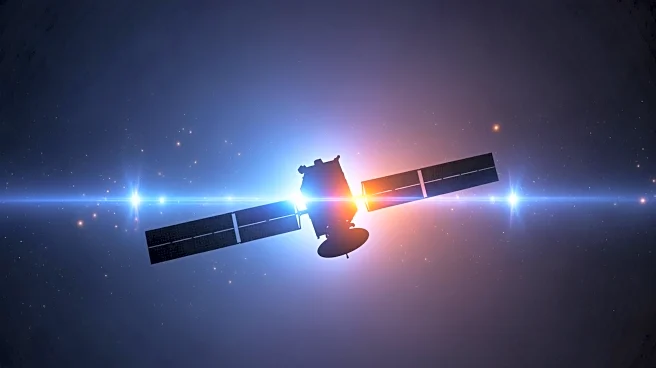
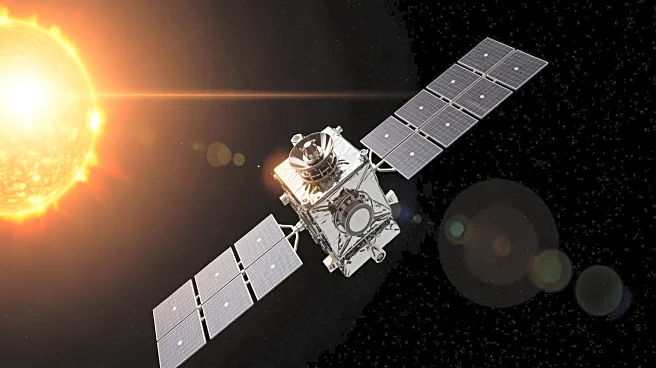
NASA has temporarily suspended the scientific operations of the Swift space telescope due to a significant decline in its orbit, attributed to increased solar activity and atmospheric drag. Launched in 2004, Swift has been instrumental in studying gamma-ray
bursts, which are high-energy explosions resulting from events like the collapse of massive stars or the merging of neutron stars. The observatory, renamed the Neil Gehrels Swift Observatory in 2018, has been a key player in documenting thousands of gamma-ray events. Recently, the telescope's orbit has been decreasing faster than expected, with its altitude dropping below 400 kilometers. To address this, NASA has contracted a commercial space company to elevate Swift's orbit, a mission initially planned for spring but now slated for summer. In the interim, NASA is minimizing atmospheric drag by limiting the telescope's maneuvers and keeping only one instrument active.
Why It's Important?
The situation with the Swift observatory underscores the vulnerability of space missions to natural phenomena like solar cycles. The increased solar activity has expanded Earth's atmosphere, increasing drag on satellites in low Earth orbit. This development highlights the challenges faced by long-term space missions and the need for innovative solutions to extend their operational life. The planned orbit-raising mission represents a significant step in utilizing commercial space capabilities for scientific purposes. Success in this endeavor could set a precedent for future collaborations between NASA and private companies, potentially leading to more cost-effective and efficient solutions for maintaining and extending the life of space assets. The outcome of this mission will be crucial for the continued study of cosmic phenomena and could influence future strategies for managing satellite orbits.
What's Next?
NASA's immediate focus is on stabilizing Swift's orbit until the planned intervention in the summer. The success of the orbit-raising mission will determine whether Swift can continue its valuable research. If successful, the observatory could resume its role in studying gamma-ray bursts and other cosmic events. However, if the mission fails or is delayed, the risk of losing the observatory permanently increases. This situation may prompt NASA and other space agencies to develop more robust strategies for dealing with similar challenges in the future, potentially leading to advancements in satellite technology and orbit management.