







What's Happening?
Hybrid Care 2.0 is an emerging healthcare model that integrates AI-powered telehealth, continuous remote monitoring, and predictive analytics to provide a patient-centered experience. This model is designed to shift healthcare from a reactive to a predictive approach,
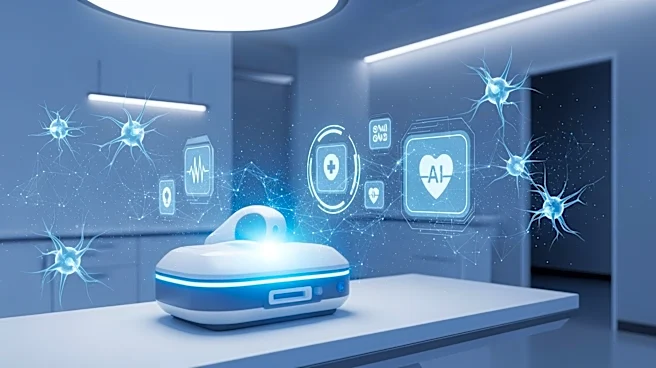
focusing on early detection and prevention of health issues. The system uses wearables and remote monitoring devices to collect vital data, which AI analyzes to identify early warning signs of conditions like heart failure and diabetes. The market for AI remote patient monitoring is expected to grow significantly, driven by the potential to reduce hospitalizations and healthcare costs. Hybrid Care 2.0 is particularly impactful in chronic disease management and post-acute recovery, offering hospital-level monitoring without the associated costs and disruptions.
Why It's Important?
The implementation of Hybrid Care 2.0 could significantly impact the U.S. healthcare system by addressing workforce shortages and improving access to specialist care, especially in rural and underserved areas. The model's focus on prevention and early intervention could lead to substantial cost savings and better health outcomes. As the U.S. faces a projected shortage of healthcare professionals, the integration of AI and remote monitoring can help manage patient loads more effectively. The model also emphasizes equity, aiming to close access gaps that have persisted due to geographic and economic barriers. Successful implementation could redefine healthcare delivery, making it more efficient and accessible.
What's Next?
For Hybrid Care 2.0 to scale successfully, it requires more than just technological deployment. Key factors include real-time data sharing, human-AI collaboration, rigorous outcomes tracking, and a commitment to equity. Investment is already moving towards predictive remote monitoring and AI triage tools. Healthcare leaders are encouraged to build integrated systems that focus on prevention and patient-centered care. The model's success will depend on the ability of health systems, payers, and solution-builders to adapt quickly and leverage the full benefits of this innovative approach.