








What's Happening?
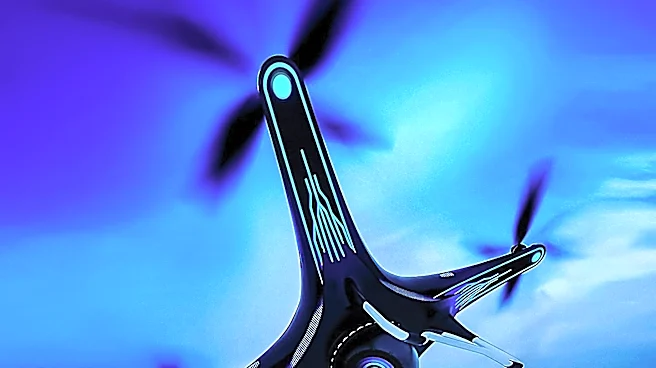
The Baltimore County Police Department (BCoPD) is expanding its 'Drones as First Responder' (DFR) program by installing new drone docking stations in the Towson area. This initiative aims to enhance emergency response capabilities by allowing drones to be
deployed more quickly and efficiently. The drones are already being utilized to assist officers with 911 and police-generated calls, providing live aerial views of scenes as or before officers arrive. These unmanned aircraft systems (UAS) are also instrumental in locating missing children or vulnerable adults and aiding in the de-escalation of incidents. The BCoPD has clarified that these drones will not be used for routine patrolling or persistent surveillance, and currently, seventeen BCoPD officers are certified to operate them. The installation of these docking stations marks a significant step in integrating drone technology further into the department's operational strategies.
Why It's Important?
The expansion of Baltimore County's drone program signifies a growing trend in U.S. law enforcement towards leveraging advanced technology for public safety. This move is important because it can significantly improve response times and situational awareness for officers, potentially leading to more effective interventions and safer outcomes in emergency situations. By providing an aerial perspective, drones can offer critical information that might not be immediately accessible from the ground, helping to assess risks, identify threats, and guide ground units more strategically. This technology can also play a crucial role in search and rescue operations, particularly for vulnerable populations, by covering large areas quickly. The explicit statement that drones will not be used for patrolling or persistent surveillance is vital for addressing privacy concerns and maintaining public trust, which are often major hurdles in the adoption of such technologies by police departments. The success and public reception of this program in Baltimore County could influence other U.S. municipalities considering similar technological integrations.
What's Next?
Following the installation of the new drone docking stations, the Baltimore County Police Department will likely continue to evaluate the effectiveness and efficiency of its expanded DFR program. This evaluation will involve assessing response times, incident outcomes, and the overall impact on public safety. There may be further training and certification for additional officers to operate the drones, expanding the program's reach and capabilities. Other police departments across the U.S. will likely monitor Baltimore County's experience, potentially leading to similar adoptions or adaptations of drone technology in their own jurisdictions. Public engagement and transparency regarding drone usage policies will remain crucial to ensure community support and address any evolving privacy concerns. Future developments could include integrating more advanced drone capabilities, such as thermal imaging or enhanced communication systems, as the technology continues to evolve.
Beyond the Headlines
The deployment of drone technology by law enforcement, as seen in Baltimore County, raises broader discussions about the balance between public safety and individual privacy rights. While drones offer undeniable advantages in emergency response and situational awareness, their increasing presence in public spaces necessitates clear ethical guidelines and robust oversight mechanisms. The BCoPD's commitment against using drones for routine patrolling or persistent surveillance is a critical step in this regard, but the definition and enforcement of such limitations will be an ongoing challenge. This development also highlights the evolving nature of policing in the digital age, where technology is rapidly transforming traditional methods. The long-term implications include potential shifts in public perception of law enforcement, the need for new legal frameworks to govern drone use, and the continuous debate over how to harness technological advancements for societal benefit without infringing on civil liberties. The integration of AI and advanced analytics with drone data could further complicate these issues, requiring careful consideration of data privacy and algorithmic bias.