
What's Happening?
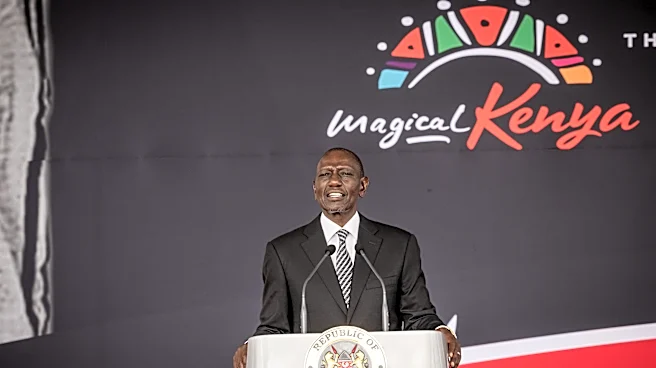
President William Ruto has directed the Education Ministry to undertake a comprehensive review of school capitation, which refers to the per-pupil grant provided by the state to public schools. The President issued
this directive during the annual meeting of the Kenya Comprehensive School Heads Association in Mombasa. He expects a detailed report on the review by January 2027, which will inform his decisions on potential changes to the funding model. The Teachers Service Commission, responsible for recruiting and managing public school teachers, has also been instructed to re-evaluate the numbers. President Ruto cited inflation and other pressures as reasons for the review. Currently, primary school capitation is approximately Ksh2,300 per learner, equivalent to about US$18. The review will also consider merging primary and junior school capitation into a single funding model for comprehensive schools.
Why It's Important?
This directive is crucial for the future of public education in Kenya, as capitation directly impacts the operational capacity of schools and the quality of education provided. A potential increase in capitation, as suggested by press accounts, would significantly alleviate financial pressures on public schools, enabling them to better cover running costs, procure resources, and potentially improve teacher welfare. This move could also address concerns from parents regarding the cost of education, especially in the context of rising inflation. The integration of primary and junior school funding into a single model signifies a structural reform aimed at streamlining financial management and ensuring equitable resource distribution across different educational levels. The outcome of this review will have direct implications for millions of students, teachers, and parents across the country, influencing educational standards and access.
What's Next?
The Education Ministry and the Teachers Service Commission are now tasked with conducting the review and submitting their report to President Ruto by January 2027. This report will serve as the basis for the President's decisions regarding any adjustments to the capitation rates and the implementation of a unified funding model for comprehensive schools. Parents of public school pupils and educational stakeholders will be closely watching for the findings of this review and the subsequent policy changes. While no new capitation rate or cost estimate has been announced, the expectation is that the review could lead to an increase in per-pupil funding. The structural changes, particularly the merger of primary and junior school funding, will also be a key area of focus, as they will redefine how financial resources are allocated to schools.
Beyond the Headlines
The President's order to review school funding extends beyond mere financial adjustments; it reflects a broader commitment to addressing educational disparities and ensuring access to quality education for all Kenyan children. By emphasizing that no student should be denied higher education due to financial constraints, President Ruto is signaling a policy direction aimed at social equity and human capital development. The timing of this review, with a report due by January 2027, also places it within the political calendar, potentially influencing public perception and support ahead of future elections. The success of these reforms will depend not only on the financial adjustments but also on effective implementation and oversight to ensure that increased funding translates into tangible improvements in educational outcomes and infrastructure. This initiative could also stimulate discussions on the overall funding model for higher education, as indicated by separate plans to change the higher education funding model from January 2027.