


What's Happening?
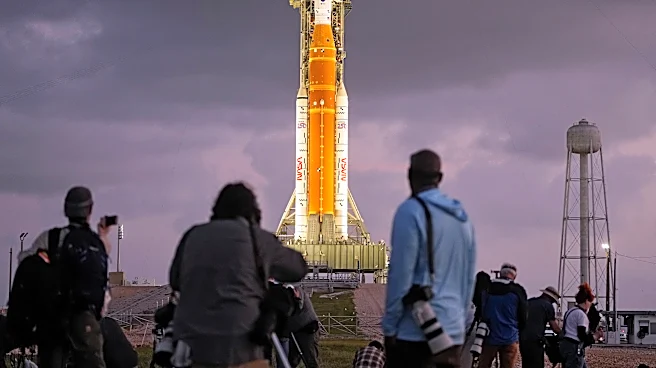
NASA's Artemis II mission encountered a minor setback when a fault light indicated a malfunction in the spacecraft's $30 million Universal Waste Management System (UWMS), commonly referred to as the toilet. The issue was quickly addressed, allowing the four
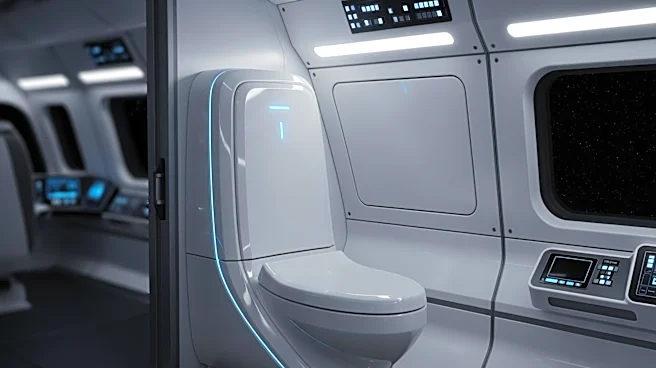
astronauts on the 10-day mission to continue with their journey without further inconvenience. The UWMS represents a significant advancement in space toilet technology, designed to address previous complaints from astronauts about onboard facilities. Unlike the primitive systems used during the Apollo missions, the UWMS includes a private cubicle with handrails and foot tethers to ensure stability in zero gravity. The system also features a funnel for urine and a suction mechanism for solid waste, which is stored for disposal upon return to Earth.
Why It's Important?
The successful resolution of the toilet malfunction on Artemis II highlights the importance of reliable life support systems in space exploration. As NASA aims to establish a permanent human presence in space, effective waste management is crucial for maintaining astronaut health and preventing contamination of the space environment. The UWMS not only provides comfort and privacy for astronauts but also represents a step towards sustainable living in space. This development is critical as NASA plans longer missions and the potential establishment of lunar bases, where efficient waste management will be essential for long-term habitation.
What's Next?
As the Artemis II mission progresses, NASA will continue to monitor the performance of the UWMS and other life support systems. The insights gained from this mission will inform future designs and improvements, particularly for the upcoming Artemis III mission, which aims to land astronauts on the lunar surface. NASA's focus on sustainable waste management will also play a role in the development of technologies for future Mars missions, where long-duration space travel will require even more robust systems.
Beyond the Headlines
The advancements in space toilet technology reflect broader trends in space exploration, where human comfort and sustainability are becoming increasingly prioritized. The development of the UWMS is part of a larger effort to create self-sustaining habitats in space, which could have implications for future space tourism and commercial space ventures. Additionally, the focus on waste management highlights the ethical considerations of preserving the space environment and preventing biological contamination.