






What's Happening?
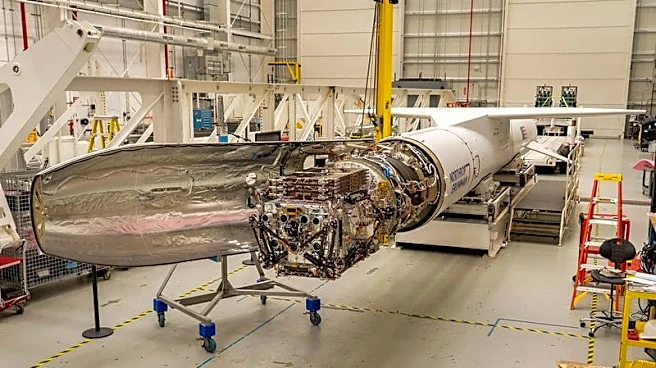
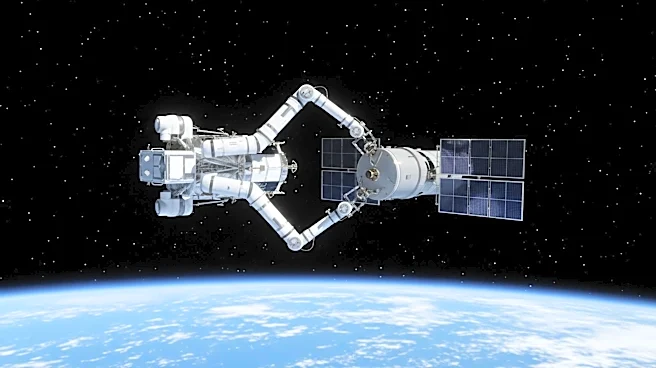
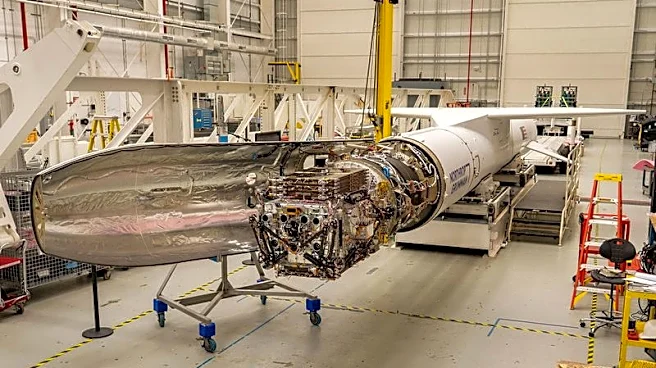
NASA, in collaboration with its partners, has rescheduled the launch of the Katalyst robotic servicing spacecraft, LINK, which is designed to enhance the orbit of the Neil Gehrels Swift Observatory. The launch is now set for no earlier than 8:35 p.m.
UTC+12 (4:35 a.m. EDT) on Friday, July 3. The mission will utilize Northrop Grumman’s Pegasus XL rocket, launching from Kwajalein Atoll in the Marshall Islands. A previous launch attempt was aborted due to a software issue affecting the Pegasus rocket's navigation performance. The issue was identified and resolved with a software update, ensuring the safety and readiness of the Pegasus rocket and its carrier aircraft, the L-1011. NASA will continue to provide updates on the mission through its Swift blog.
Why It's Important?
This mission is crucial for maintaining the operational capabilities of the Neil Gehrels Swift Observatory, which plays a significant role in observing gamma-ray bursts and other cosmic phenomena. By boosting the observatory's orbit, NASA aims to extend its operational life, allowing for continued scientific discoveries. The successful execution of this mission also demonstrates the reliability and effectiveness of robotic servicing spacecraft, which could pave the way for future satellite maintenance and repair missions. This has broader implications for the sustainability of space operations, potentially reducing the need for new satellite launches and minimizing space debris.
What's Next?
Following the successful launch and orbit boost, the Swift Observatory is expected to continue its mission of observing high-energy astrophysical phenomena. The mission's success could lead to more frequent use of robotic servicing spacecraft for satellite maintenance, potentially revolutionizing how space agencies manage and extend the life of their assets in orbit. Stakeholders in the aerospace industry, including satellite operators and space agencies, will likely monitor the mission's outcomes closely, as it could influence future strategies for satellite management and space exploration.