








What's Happening?
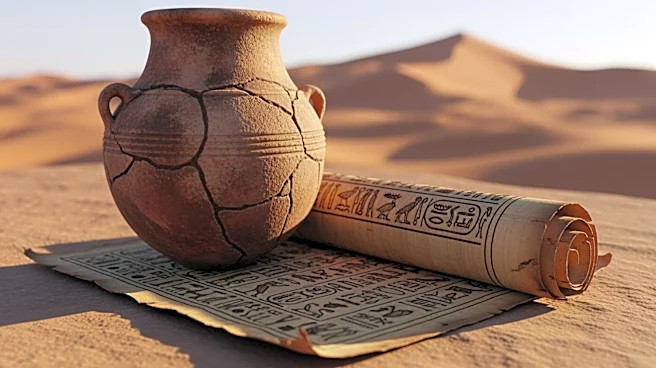
Egypt has revealed a collection of ancient artifacts, including Pharaonic funerary furniture and Roman basilica remains, as part of efforts to enhance its tourism industry. The discoveries were made in Beni Suef, south of Cairo, and include a marble head
of Aphrodite. These findings are part of a broader initiative to attract tourists and support the economy, which has been affected by political turmoil and the pandemic. The Grand Egyptian Museum, inaugurated near the Giza Pyramids, is central to these efforts. The artifacts reflect Egypt's rich historical legacy and its role as a commercial hub during the Roman Empire.
Why It's Important?
The unveiling of these artifacts is crucial for Egypt's tourism sector, a vital component of its economy. Tourism has been recovering from setbacks caused by political instability and global health crises. By showcasing its historical treasures, Egypt aims to draw international visitors, thereby generating revenue and supporting economic growth. The initiative also highlights the country's cultural heritage, reinforcing its position as a key destination for historical tourism. Successful promotion of these artifacts could lead to increased tourist numbers, benefiting local businesses and the national economy.
What's Next?
Egypt will likely continue to promote its archaeological discoveries to attract more tourists. The government may implement additional measures to ensure the safety and accessibility of tourist sites. Efforts to enhance infrastructure and services around key historical locations could be prioritized. The tourism sector's performance will be closely monitored, with potential adjustments to strategies based on visitor feedback and economic indicators.