






What's Happening?
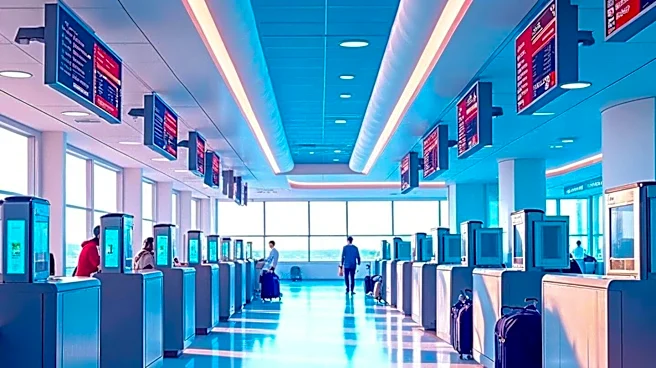
Massport officials have announced the extension of a pilot program that allows Logan Airport passengers to check in and go through security at a remote terminal in Framingham. Initially planned as a three-month trial, the program has seen significant
success, with over 10,000 users since its launch in June. Due to increasing demand, the Framingham terminal will continue operations until at least March next year. Massport is also considering expanding the program to include more airlines and additional remote terminal locations, such as Braintree and potentially Boston's Hynes Convention Center. The initiative aims to alleviate traffic congestion at Logan Airport, which served over 43 million passengers last year and is expected to reach 53 million annually in the coming decade.
Why It's Important?
The expansion of remote terminals at Logan Airport represents a significant shift in airport operations, potentially setting a precedent for other airports across the United States. By decentralizing check-in and security processes, Massport aims to reduce traffic congestion and improve passenger convenience. This approach could lead to more efficient airport operations and enhance the travel experience, particularly as passenger numbers continue to rise. The success of this program may encourage other airports to adopt similar strategies, potentially transforming how airports manage passenger flow and infrastructure demands.
What's Next?
Massport plans to continue discussions with additional airlines to expand the Framingham terminal's service offerings. Construction of a permanent remote terminal in Braintree is slated to begin this fall, with completion expected in about two and a half years. Further expansion plans include potential sites in Woburn and Danvers. As the program grows, Massport will need to address logistical challenges, such as increasing parking capacity and coordinating with bus contractors to expand service hours and routes. The success of these expansions will likely influence future decisions on remote terminal implementations.