







What's Happening?
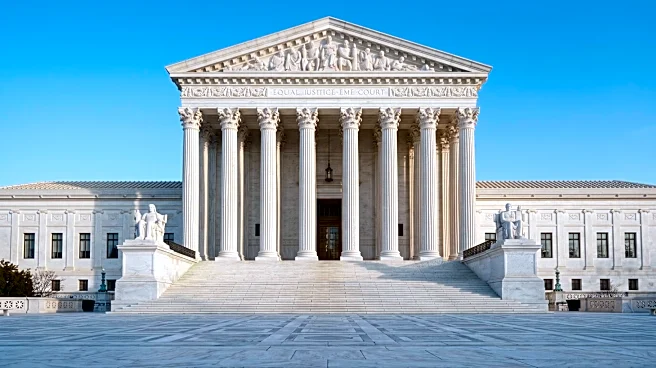
Congressman Mark Harris (NC-08) delivered remarks on the House floor in support of H.J. Res. 1, a proposed constitutional amendment. This legislation aims to mandate that the Supreme Court of the United States be composed of nine justices. According to Congressman Harris,
this action is crucial for upholding the Court's legitimacy, protecting the system of checks and balances, and safeguarding the fundamental freedoms and rights of all Americans, irrespective of the political party in power. He highlighted a growing concern over calls to 'pack the Court' from those dissatisfied with its ideological balance, arguing that such efforts are not about ethical principles or individual rights but rather about consolidating power and intimidating the judiciary. Harris emphasized that the founders established an independent Supreme Court as a vital safeguard for liberty, and its role is to uphold the Constitution and protect freedom, even when it means standing against popular sentiment.
Why It's Important?
The debate over the size of the Supreme Court carries significant implications for the U.S. political landscape and the balance of power. Maintaining a nine-justice court, as advocated by Congressman Harris, is seen by proponents as essential for preserving judicial independence and preventing the politicization of the judiciary. Altering the number of justices could set a precedent for future administrations to expand or contract the court based on political expediency, potentially undermining its perceived impartiality and public trust. This issue directly impacts the stability of legal interpretations and the enforcement of constitutional rights, as a court with a fluctuating number of justices could lead to more frequent and ideologically driven reversals of established legal precedents. The integrity of the Supreme Court as a non-partisan arbiter of justice is central to the functioning of American democracy, and any perceived attempt to manipulate its composition could erode public confidence in the rule of law.
What's Next?
The proposed constitutional amendment, H.J. Res. 1, will proceed through the legislative process in Congress. For a constitutional amendment to be ratified, it must be approved by a two-thirds vote in both the House of Representatives and the Senate, and then by three-fourths of the state legislatures. This is a lengthy and challenging process, indicating that any immediate change to the Supreme Court's composition is unlikely. The remarks by Congressman Harris are part of an ongoing national conversation about judicial reform and the role of the Supreme Court in American society. Stakeholders, including legal scholars, political parties, and civil society groups, will likely continue to voice their opinions on the matter, influencing public discourse and potentially shaping future legislative efforts. The outcome of this proposal will depend on sustained political will and broad consensus across different political factions.
Beyond the Headlines
The discussion surrounding the Supreme Court's composition delves into fundamental questions about the nature of American democracy and the separation of powers. The concept of 'court packing' has historical roots, notably during President Franklin D. Roosevelt's administration, and has consistently raised concerns about the politicization of the judiciary. Beyond the immediate legislative push, this debate highlights a deeper societal tension regarding the interpretation of the Constitution and the role of unelected judges in shaping national policy. The long-term implications of maintaining or altering the court's size could affect everything from civil rights and environmental regulations to economic policy, as the court's decisions have far-reaching consequences. The integrity and perceived independence of the Supreme Court are vital for maintaining public trust in governmental institutions, and any actions that compromise this could have profound and lasting effects on the nation's legal and political stability.