



What's Happening?
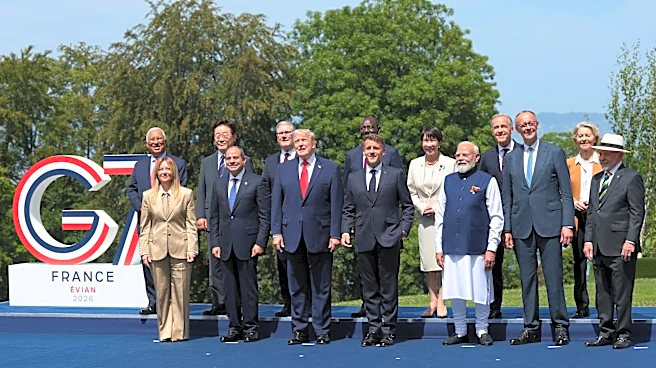
Foreign Ministers from the Group of Seven (G7) nations, including the United States, issued a joint statement condemning North Korea's cryptocurrency thefts and cybercrimes. The statement, released after a diplomatic meeting in Paris, highlighted concerns
over Pyongyang's illicit activities in cyberspace, which are seen as funding its illegal nuclear weapons and ballistic missile programs. The G7 also addressed the broader issue of expanding transnational organized crime through internet scams, emphasizing the need for private sector partnerships to dismantle these criminal networks. Furthermore, the ministers expressed concern that advanced artificial intelligence models could be exploited by malicious actors for cyberattacks or the development of chemical and biological weapons. To mitigate these risks while fostering scientific advancement, G7 countries committed to discussing safety measures with companies and universities within the framework of the Hiroshima Process.
Why It's Important?
This G7 statement underscores the growing international concern over state-sponsored cybercrime and the potential misuse of emerging technologies like AI. For the U.S., North Korea's crypto thefts represent a direct threat to financial security and global stability, as these funds can be used to advance weapons programs that destabilize the Indo-Pacific region. The focus on internet scams also highlights the economic vulnerability of individuals and businesses to transnational organized crime. The G7's commitment to discussing AI safety measures through the Hiroshima Process is crucial for establishing international norms and safeguards, aiming to prevent AI from becoming a tool for malicious actors while still promoting innovation. This collaborative approach is vital for protecting U.S. interests in cybersecurity and technological development.
What's Next?
Following this declaration, G7 nations are expected to continue diplomatic efforts to counter North Korean cyber activities and illicit financing. Discussions within the Hiroshima Process will likely intensify, focusing on developing concrete safety measures and ethical guidelines for advanced AI models in collaboration with technology companies and academic institutions. This could lead to new international frameworks or voluntary codes of conduct for AI development and deployment. Additionally, increased cooperation with the private sector is anticipated to enhance efforts in combating online fraud and dismantling transnational criminal organizations. The G7's stance may also influence national policies and regulations in member countries, including the U.S., regarding cybersecurity, AI governance, and sanctions against state-sponsored cyber threats.
Beyond the Headlines
The G7's emphasis on both state-sponsored cybercrime and the risks of advanced AI points to a broader geopolitical shift where technological prowess is increasingly intertwined with national security. The condemnation of North Korea's crypto thefts highlights the evolving nature of financial warfare and the challenges of tracking illicit funds in the digital age. The proactive approach to AI safety through the Hiroshima Process suggests a recognition that technological advancements, while beneficial, carry significant dual-use potential that requires international oversight. This could set a precedent for how global powers address future emerging technologies, balancing innovation with security concerns. The call for private sector partnerships also signals a growing understanding that governments alone cannot combat these complex, technologically driven threats, necessitating a collaborative ecosystem for global security.