



What's Happening?
Farmers across the Midwest are facing challenges due to quick weather changes and fewer workable field days, which are compressing the spring planting window. Manni Singh, an associate professor of cropping systems agronomy at Michigan State University,
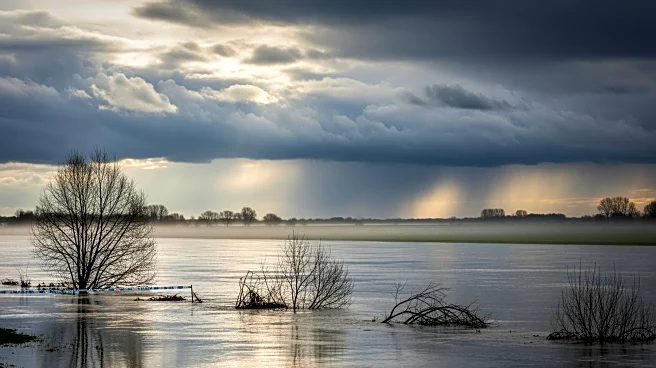
noted that the number of suitable fieldwork days from mid-April to mid-May has decreased over the past two decades. This reduction is attributed to more intense storms, rapid warmups followed by cold snaps, and soils that remain saturated longer. As a result, farmers must make early decisions about planting, often with limited opportunities. Equipment capacity also influences these decisions, with single-planter operations needing to choose which crop to plant first, while two-planter systems can handle both crops simultaneously.
Why It's Important?
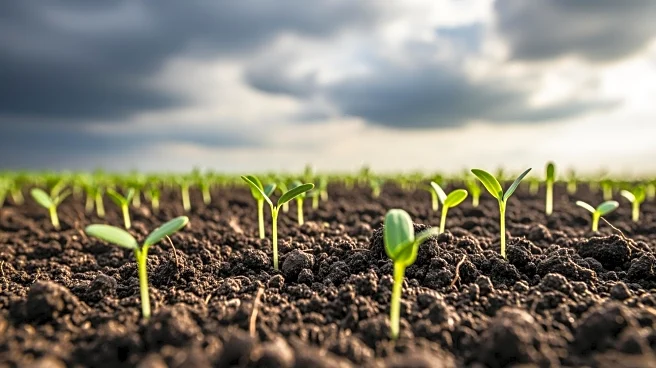
The changing weather patterns and reduced planting windows have significant implications for agricultural productivity and economic stability in the Midwest. Farmers must adapt their strategies to ensure optimal yields, which can affect the supply chain and market prices for corn and soybeans. Early planting can lead to higher yields, but it also carries risks such as frost injury and uneven emergence. The ability to make informed decisions based on weather conditions rather than the calendar is crucial for maintaining crop health and maximizing output. This situation underscores the need for innovative farming techniques and equipment to cope with environmental challenges.
What's Next?
Farmers are likely to continue adjusting their planting strategies, prioritizing conditions over traditional planting dates. Agronomists recommend focusing on soil conditions, weather forecasts, and equipment availability to make the most of the limited planting days. As the planting season progresses, farmers may need to shift priorities between corn and soybeans, depending on the weather and field conditions. The ongoing adaptation to these challenges will be essential for sustaining agricultural productivity in the region.
Beyond the Headlines
The broader implications of these planting challenges include potential shifts in agricultural practices and policies. As farmers adapt to changing weather patterns, there may be increased interest in research and development of resilient crop varieties and advanced farming technologies. Additionally, the economic impact on rural communities dependent on agriculture could lead to policy discussions about support and resources for farmers facing environmental challenges.