


What's Happening?
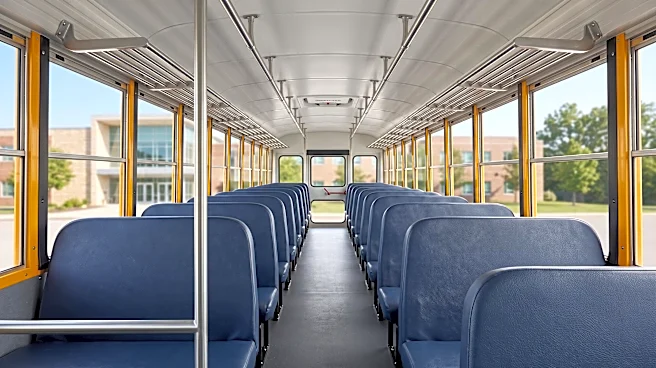
The New Jersey Education Association (NJEA) is actively campaigning to safeguard the value and employment of Education Support Professionals (ESPs) in the state. ESPs, who include paraprofessionals, teacher's aides, secretaries, custodians, bus drivers,
and food service aides, are facing increasing threats of privatization and job insecurity due to budget shortfalls and funding cuts. The NJEA highlights that many school boards are considering outsourcing these essential services to private contractors, who often prioritize profit over the quality of education and employee well-being. The association argues that ESPs are vital to maintaining safe, healthy, and effective learning environments and are often the lowest-paid positions in school districts, making them vulnerable to financial instability and the loss of benefits.
Why It's Important?
The efforts by the NJEA to protect Education Support Professionals are crucial for the stability and quality of public education in New Jersey and potentially serve as a model for other states. The privatization of ESP roles can lead to a decline in the quality of services, as private contractors may employ temporary workers with less institutional knowledge and dedication. This trend also impacts the financial stability of ESPs, many of whom struggle to make ends meet and may lose critical benefits like health insurance and retirement plans if their hours are reduced or jobs are outsourced. The erosion of ESP positions weakens the overall public education system by removing dedicated staff who build relationships with students and contribute significantly to the school community. This issue underscores the broader challenge of funding public education and the pressure on school districts to cut costs, often at the expense of essential personnel.
What's Next?
The NJEA is advocating for an ESP Bill of Rights, a framework that promotes fair compensation, recognition, safe working environments, affordable healthcare, paid leave, professional development, manageable workloads, secure retirement, and protection from privatization. This initiative aims to secure legislative and policy changes that would protect ESPs' jobs and benefits. Local education associations are expected to continue organizing their members and communities to fight against privatization efforts by school boards. There will likely be ongoing discussions and negotiations between unions, school districts, and state lawmakers regarding funding for public education and the employment conditions of ESPs. The outcome of these efforts in New Jersey could influence similar movements in other states facing comparable challenges in their public education systems.
Beyond the Headlines
The struggle to protect Education Support Professionals in New Jersey reflects a deeper national trend of public sector privatization and its impact on workers and communities. The push to outsource services in public education raises ethical questions about the balance between cost-efficiency and the quality of public services, as well as the social contract between public institutions and their employees. It highlights how financial pressures can lead to decisions that undermine the stability of the workforce and the overall educational environment. This situation also brings to light the often-overlooked contributions of ESPs, whose roles are fundamental to the daily functioning of schools but are frequently undervalued. The debate over privatization in education is not just about budgets; it's about the kind of public institutions society wants to maintain and the value placed on the people who make them run.