
What's Happening?
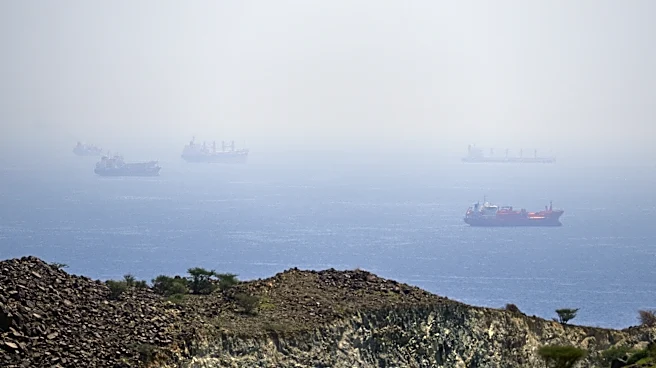
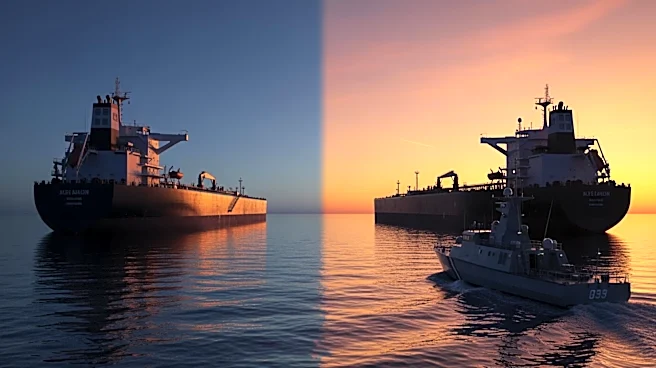
The United States has reportedly intercepted and redirected three Iranian-flagged oil tankers in waters near India, Sri Lanka, and Malaysia. This action follows Iran's seizure of two ships in the Strait
of Hormuz, despite an extended ceasefire. The U.S. military has not officially commented on these interceptions, but U.S. Central Command has stated that 29 ships have been turned around as part of the ongoing blockade of the Strait of Hormuz. Iranian leaders have indicated that a lasting ceasefire and reopening of the Strait would require the U.S. to lift its naval blockade and for Israel to commit to a ceasefire. The situation remains tense as the Pentagon estimates that clearing Iranian mines from the Strait could take six months, potentially prolonging economic consequences.
Why It's Important?
The interception of Iranian tankers by the U.S. highlights the escalating tensions in the Strait of Hormuz, a critical chokepoint for global oil shipments. The blockade and subsequent military actions could significantly impact global oil prices and supply chains, affecting economies worldwide. The U.S. and Iran's standoff over the Strait of Hormuz underscores the geopolitical complexities in the region, with potential repercussions for international trade and energy security. The situation also reflects broader U.S.-Iran relations and the challenges in achieving diplomatic resolutions amidst military confrontations.
What's Next?
The ongoing blockade and military actions suggest that tensions in the Strait of Hormuz are unlikely to de-escalate soon. The U.S. and Iran may continue to engage in military posturing, with potential impacts on global oil markets. Diplomatic efforts may be necessary to prevent further escalation, but the current stalemate indicates that negotiations may be challenging. The international community, including major oil-importing countries, will likely monitor the situation closely, as prolonged disruptions could have significant economic implications.