



What's Happening?
Hluhluwe-iMfolozi Park (HiP) in South Africa has significantly reduced rhino poaching incidents through a comprehensive strategy involving dehorning its rhino population and deploying highly trained canine units. Organized crime, which fuels the illegal
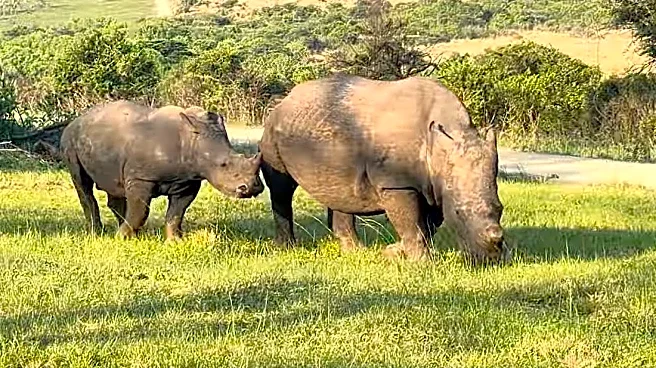
killing of rhinos and horn trafficking, remains a major threat to the park's important rhino population. In 2024, HiP dehorned all its black and white rhinos and continues annual maintenance dehorning. This effort, combined with the effectiveness of its canine unit, has led to a substantial decrease in poaching incidents from 198 in 2024 to 63 in 2025. The park's canine unit, led by primary tracker Mafu, along with Chief and Captain, has been instrumental in tracking suspects and has directly contributed to arrests. Two puppies are currently in training to further strengthen the unit's future capabilities. Save the Rhino awarded grants totaling £55,500 to canine units at three key sites across Africa, including HiP, to bolster rhino protection efforts.
Why It's Important?
The success of Hluhluwe-iMfolozi Park in reducing rhino poaching highlights the critical role of proactive conservation strategies and specialized anti-poaching units in combating wildlife crime. The decline in poaching incidents demonstrates that dehorning, while a drastic measure, can be an effective deterrent when combined with robust security measures like canine units. This approach not only protects individual rhinos but also contributes to the long-term survival and recovery of these endangered species. The funding provided by organizations like Save the Rhino underscores the global commitment to conservation and the recognition of the severe threat posed by organized crime to biodiversity. The methods employed at HiP could serve as a model for other wildlife reserves facing similar challenges, offering a tangible pathway to mitigate poaching and secure vulnerable animal populations.
What's Next?
Hluhluwe-iMfolozi Park plans to continue its annual maintenance dehorning program to sustain the deterrent effect against poachers. The park's canine unit will be further strengthened with the integration of two new puppies currently undergoing training, ensuring the unit's long-term resilience and effectiveness. The new Unit Coordinator, Tristan Patrick, funded by Save the Rhino, will continue to refine training structures, aiming to further enhance the tracking capabilities of the dogs. Continued financial support from conservation organizations will be crucial for maintaining these operations, including vehicle costs, handler support, and ongoing training. The park will likely continue to collaborate with international partners to share best practices and adapt to evolving poaching tactics, aiming for further reductions in incidents and the eventual eradication of rhino poaching within its boundaries.
Beyond the Headlines
The fight against rhino poaching in South Africa extends beyond immediate protection measures, touching upon broader issues of international organized crime, economic disparities, and community engagement. The demand for rhino horn, primarily driven by illicit markets, fuels sophisticated criminal networks that often exploit local communities. Effective conservation efforts, therefore, require not only direct anti-poaching interventions but also strategies that address the root causes of poaching, such as poverty and lack of economic opportunities in areas surrounding wildlife reserves. Furthermore, the success at HiP underscores the ethical considerations surrounding dehorning, a practice that is a direct response to human-induced threats rather than a natural ecological process. This situation highlights the ongoing tension between human activities and wildlife preservation, emphasizing the need for sustainable solutions that integrate conservation with socio-economic development.