



What's Happening?
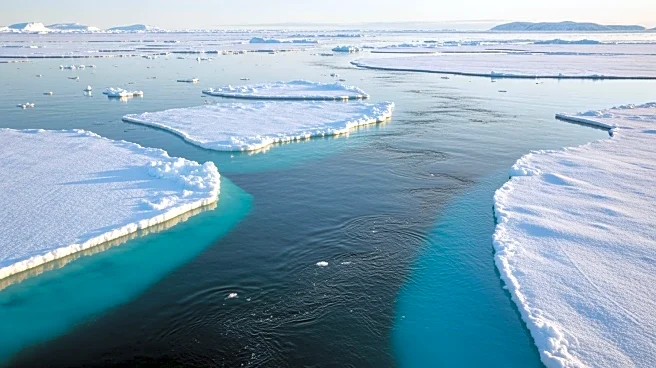
Recent expeditions have revealed that melting ice in the Canadian Arctic is opening previously inaccessible waters, particularly around the Queen Elizabeth Islands and western Tuvaijuittuq. The Canadian icebreaker CCGS Amundsen, led by researchers from
Fisheries and Oceans Canada and the University of Manitoba, successfully navigated these waters in September. The expedition found significantly deteriorated ice, with the thickest measuring around seven meters, indicating increased navigability due to climate change. This development allows for comprehensive oceanographic research in the region, which was previously hindered by thick ice. However, the melting ice poses risks to northern indigenous communities, threatening their food security and traditional ways of life.
Why It's Important?
The opening of new navigable areas in the Arctic due to melting ice has significant geopolitical and environmental implications. As the ice recedes, the region becomes more accessible for shipping routes, potentially increasing economic activity but also raising the risk of environmental disasters such as oil spills. The presence of Russia and China in the Arctic, particularly through the Northern Sea Route, poses strategic challenges for Canada and other Arctic nations. The increased use of these routes by sanctioned ships highlights the potential for geopolitical tensions and the need for international cooperation to manage the Arctic's fragile ecosystem. The situation underscores the broader impacts of climate change on global trade routes and national security.
What's Next?
As the Arctic becomes more navigable, there will likely be increased interest from various nations in exploiting the region's resources and strategic advantages. This could lead to heightened geopolitical tensions and necessitate new international agreements to manage Arctic navigation and environmental protection. Indigenous communities may seek greater involvement in decision-making processes to protect their interests and way of life. Additionally, scientists will continue to study the impacts of climate change on Arctic ecosystems, informing policy decisions and conservation efforts. The situation calls for a balanced approach that considers economic opportunities, environmental sustainability, and the rights of indigenous peoples.