





What's Happening?
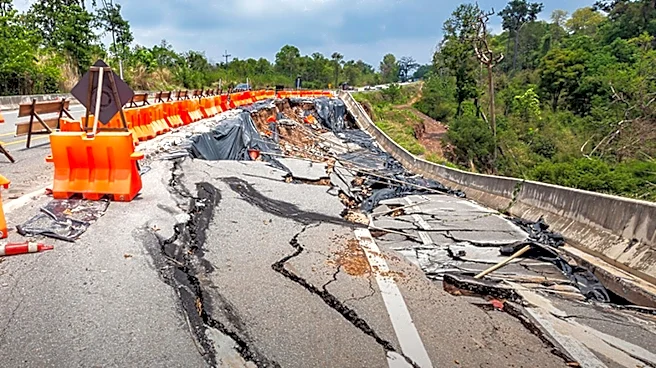
Cochise County, Arizona, is pursuing a temporary fix for the Geronimo Trail Bridge, which was destroyed by monsoon rains in August. The bridge, located near Mile 13, has been closed since the damage, impacting ranchers and Border Patrol agents who rely
on the crossing. The county estimates the cost for a full replacement at $7 million, a sum that rural Cochise County does not readily possess. Furthermore, state-imposed expenditure limits restrict the county's ability to spend even if general fund money were available, as exceeding these limits would incur penalties. District 2 Supervisor Kathleen Gomez emphasized the importance of restoring access for her district. The county is moving forward with a temporary low-water crossing, which is projected to cost less than $1 million and will be funded through flood district and public works allocations. This temporary measure aims to provide an immediate solution for those needing to travel through the area while the county addresses the long-term challenge of securing funding for a permanent replacement.
Why It's Important?
The destruction of the Geronimo Trail Bridge highlights the significant infrastructure challenges faced by rural U.S. counties due to natural disasters like monsoons. The closure has directly affected local ranchers, disrupting their operations and forcing them to find alternative, likely longer, routes. This can lead to increased operational costs and reduced efficiency for agricultural businesses, which are vital to the local economy. The impact on Border Patrol agents also raises concerns about border security and response times in the affected area. The county's struggle with both the high cost of replacement and state expenditure limits underscores a broader issue in public finance, where local governments may be constrained in their ability to respond to emergencies and maintain critical infrastructure. The need for legislative changes to address emergency spending, as mentioned by county officials, points to a systemic problem that could affect other U.S. regions vulnerable to natural disasters, potentially hindering their recovery and resilience.
What's Next?
Cochise County officials are proceeding with the construction of a temporary low-water crossing, which is expected to provide an immediate, albeit interim, solution for residents and agencies using the Geronimo Trail. This temporary project, costing under $1 million, will be funded by flood district and public works resources. Concurrently, county supervisors are collaborating with a state representative to develop legislation that would address emergency spending, potentially offering more flexibility for counties facing similar situations in the future. However, this legislative process is anticipated to take over a year to complete. In the long term, the county faces the substantial challenge of securing the estimated $7 million required for a permanent bridge replacement. This will likely involve seeking state or federal aid, as the cost is prohibitive for the county's current budget and expenditure limits. The success of these efforts will determine the long-term accessibility and economic stability of the affected region.
Beyond the Headlines
The situation in Cochise County extends beyond immediate infrastructure repair, touching upon critical aspects of rural resilience, governmental fiscal policy, and the escalating impact of climate-related weather events. The repeated flooding and the destruction of the bridge underscore the increasing vulnerability of infrastructure to severe weather patterns, which may become more frequent or intense due to climate change. This raises questions about the adequacy of current infrastructure design and funding mechanisms to withstand future environmental challenges. Furthermore, the county's predicament with state expenditure limits highlights a tension between fiscal responsibility and the urgent need for emergency response and infrastructure investment. This could prompt broader discussions on how state and federal governments can better support rural communities in disaster recovery, potentially leading to reforms in emergency funding and expenditure regulations. The long-term implications could include a re-evaluation of infrastructure priorities and a push for more resilient, climate-adaptive construction practices across the U.S.