






What's Happening?
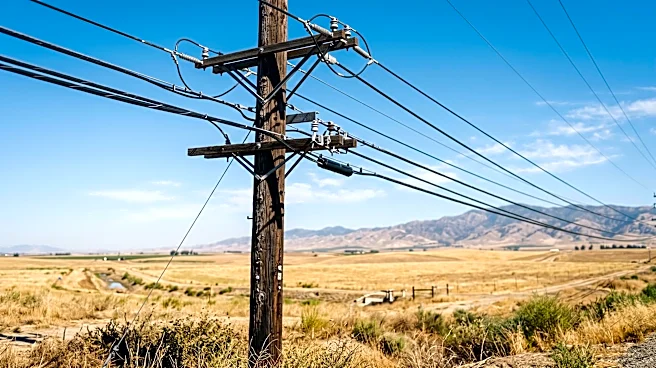
A proposed decision by the California Public Utilities Commission (CPUC) could significantly reduce Pacific Gas and Electric (PG&E)'s plans to move power lines underground, potentially eliminating projects in Fresno and Madera counties. PG&E's long-term
plan, enabled by Senate Bill 884, aimed to underground 5,000 miles of power lines in high fire-risk areas between 2028 and 2037, projecting a 98% reduction in wildfire risk and a nearly 90% decrease in power outages. The utility asserts that undergrounding protects lines from hazards like falling trees and vehicle collisions. However, the CPUC's proposed changes would alter how these projects are evaluated, using a different cost-benefit analysis. PG&E estimates this new methodology could cut over half of its proposed undergrounding mileage, rendering approximately 40 miles of planned projects in Fresno and Madera counties ineligible. The utility argues that the proposed calculations do not fully account for the long-term benefits, especially in communities with elevated wildfire risks.
Why It's Important?
This proposed ruling carries significant implications for wildfire safety and energy reliability across California, particularly for residents in high fire-threat areas. If approved, the decision could leave communities in Fresno and Madera counties, and potentially others, more vulnerable to wildfires and power outages. PG&E claims its original plan would add approximately $9 to a customer's bill, but the utility contends that the CPUC's revised calculations undervalue the benefits of undergrounding. Furthermore, PG&E takes issue with the proposed decision's method of measuring the impact of power outages, suggesting it places less value on reliability for customers in high-risk areas compared to urban communities. This could lead to a disparity in infrastructure investment and protection, disproportionately affecting rural and fire-prone regions. The outcome will determine the extent of wildfire mitigation efforts and the future of energy infrastructure development in the state.
What's Next?
The California Public Utilities Commission is currently considering the proposed changes to how undergrounding projects are evaluated. Under Senate Bill 884, proposed undergrounding projects must first receive approval from the California Office of Energy Infrastructure Safety before being reviewed by the CPUC. The CPUC's final decision will determine how much of PG&E's undergrounding plan moves forward and whether projects in Fresno and Madera counties, among others, will be included. Stakeholders, including PG&E, local communities, and environmental groups, will likely continue to advocate for their positions as the CPUC deliberates. The decision could set a precedent for future infrastructure projects aimed at mitigating climate-related risks and ensuring energy grid resilience in California.
Beyond the Headlines
The debate over PG&E's undergrounding projects highlights a broader tension between cost-effectiveness and public safety in infrastructure development. While undergrounding power lines offers clear benefits in reducing wildfire risk and improving reliability, the significant upfront costs and the methodology for evaluating these benefits remain contentious. This situation also underscores the challenges regulatory bodies face in balancing utility costs, consumer rates, and the imperative to protect communities from environmental hazards. The outcome could influence how other states approach similar infrastructure upgrades, particularly in regions susceptible to natural disasters. It also raises questions about equitable access to resilient infrastructure, as the proposed changes could prioritize certain areas over others based on a revised cost-benefit analysis, potentially leaving some vulnerable communities with less protection.