




What's Happening?
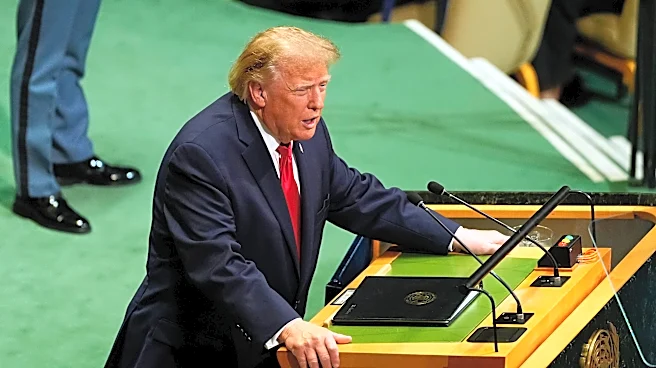
Democratic lawmakers are strongly criticizing President Trump's recent promise to issue a $5,000 dividend to all Americans if Republicans secure control of both the Senate and the House in the upcoming November midterm elections. Rep. Pete Aguilar, D-Calif.,
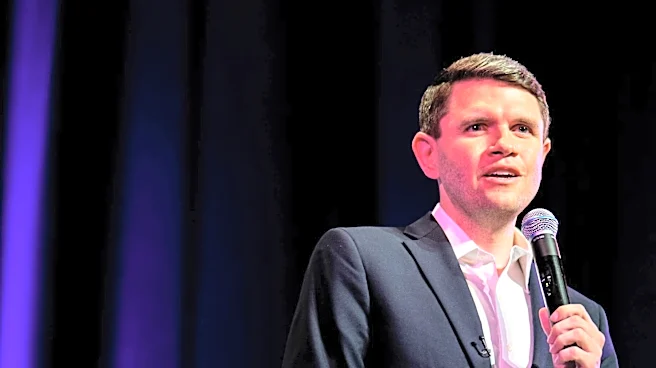
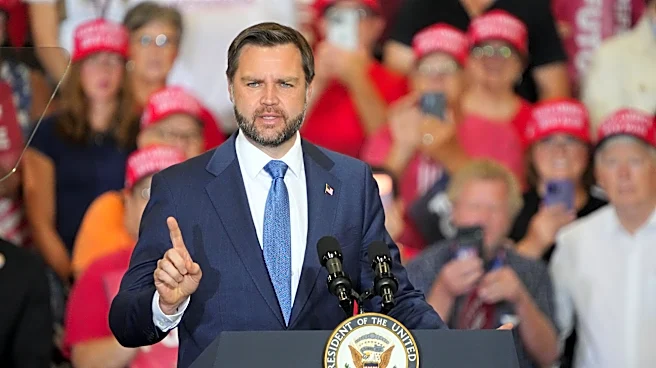
head of the House Democratic Caucus, characterized the pledge as "fantasy land," comparing it to promises of "puppies and rainbows and ponies." Other Democrats, including Rep. Chrissy Houlahan, D-Pa., labeled it a "hysterical" lie and an "unlawful bribe." Rep. Christian Menefee, D-Texas, stated, "I can guarantee you those checks ain’t happening." Many Democrats argue that President Trump has a history of making unfulfilled promises and is using this pledge as a campaign tactic because he is perceived to be struggling in the polls. The proposed payout to 240 million Americans would cost the federal government approximately $1.2 trillion, a figure President Trump has dismissed as easily affordable. Vice President JD Vance suggested tariff revenue as a potential funding source and proposed excluding wealthy Americans to reduce the cost.
Why It's Important?
This political exchange highlights the contentious nature of campaign promises, particularly those involving significant financial payouts to the public. The debate over President Trump's $5,000 dividend proposal underscores fundamental differences in economic philosophy and fiscal responsibility between the Democratic and Republican parties. Democrats are framing the promise as fiscally irresponsible and a cynical attempt to sway voters, while President Trump and his allies are presenting it as a benefit to the American people. The feasibility and funding mechanisms of such a large-scale payout are central to the discussion, with implications for national debt, taxation, and government spending. The criticism from Democrats also reflects a broader strategy to question the credibility of President Trump's past and present pledges, aiming to influence public perception ahead of critical midterm elections. The discussion also touches on the role of government in providing direct financial relief versus focusing on other areas like healthcare, as suggested by some Democratic lawmakers.
What's Next?
As the midterm elections approach, the $5,000 payout promise is likely to remain a significant point of contention in political discourse. Democratic lawmakers will continue to challenge the feasibility and sincerity of President Trump's pledge, using it to highlight what they perceive as his administration's fiscal irresponsibility and a pattern of unfulfilled promises. Republicans, on the other hand, will likely defend the proposal, emphasizing its potential benefits to American households and exploring potential funding sources like tariff revenue. The debate will intensify as campaigns ramp up, with both parties attempting to sway voters on economic issues. House Speaker Mike Johnson, R-La., has already indicated that congressional approval would be necessary for such a payout, suggesting that even if Republicans gain control, the implementation would face legislative hurdles. The public's reaction to this promise, particularly in battleground states, will be a key factor in determining its impact on election outcomes.
Beyond the Headlines
The debate surrounding President Trump's $5,000 payout promise extends beyond immediate electoral concerns, touching upon deeper questions about the nature of political campaigning and the public's trust in government. The characterization of the promise as a "fantasy land" or a "bribe" by Democrats raises ethical considerations regarding the use of direct financial incentives in political campaigns. It also highlights a growing skepticism among voters regarding grand promises, especially when past pledges have not materialized. The discussion about the affordability of such a payout, estimated at $1.2 trillion, brings into focus the long-term fiscal health of the nation and the potential for inflationary pressures or increased national debt. Furthermore, the differing priorities expressed by Democrats, who advocate for healthcare and food assistance over direct cash payments, reflect a broader ideological divide on how best to support the American populace. This episode could contribute to a re-evaluation of campaign finance ethics and the transparency required for large-scale economic proposals.