
What's Happening?
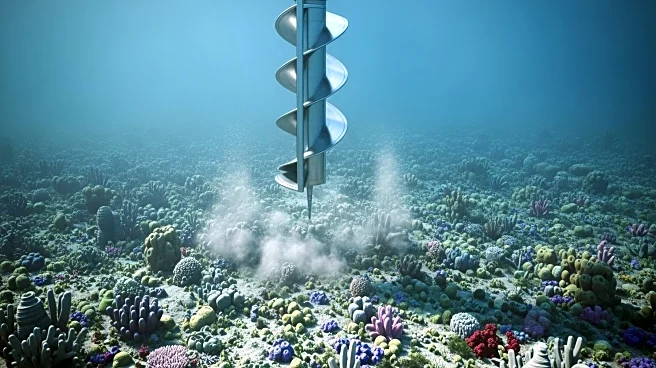
A study conducted by scientists from the Natural History Museum, the UK National Oceanography Centre, and the University of Gothenburg reveals that deep-sea mining significantly impacts seabed biodiversity.
The research, commissioned by The Metals Company, found a 37% reduction in animal populations in mined areas compared to untouched regions. The study highlights the environmental concerns associated with deep-sea mining, which is currently prohibited in international waters pending further impact assessments.
Why It's Important?
The findings underscore the environmental risks of deep-sea mining, which is controversial due to its potential to cause irreversible damage to marine ecosystems. As demand for critical minerals for green technologies increases, the pressure to explore deep-sea resources grows. However, the study suggests that current mining technologies are too damaging for large-scale commercial exploration. This raises ethical and environmental questions about balancing mineral extraction with conservation efforts, impacting policy decisions and industry practices.
What's Next?
The International Seabed Authority (ISA) will continue to evaluate the environmental impacts of deep-sea mining before approving commercial operations. Companies may need to develop less intrusive extraction methods to mitigate biodiversity loss. Stakeholders, including environmental groups and policymakers, will likely engage in discussions to address the challenges of deep-sea mining and explore alternative solutions for mineral sourcing. The study's results could influence future regulations and industry standards.