






What's Happening?
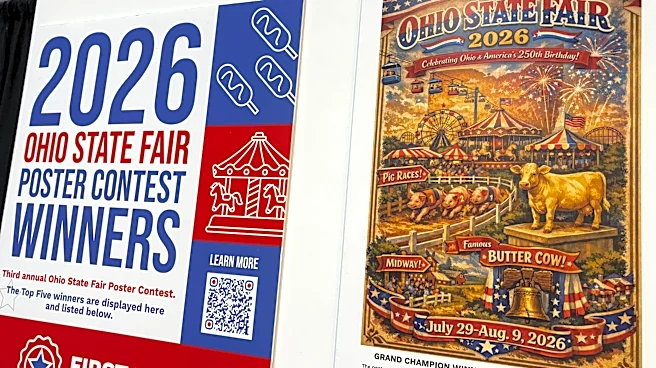
The Ohio State Fair is set to revise its rules for the annual poster contest after awarding the 2026 grand champion title to an entry created using artificial intelligence (AI). The decision to award the prize to an AI-generated poster has sparked controversy,
prompting fair organizers to announce a prohibition on AI use in future contests. Alicia Shoults, the fair’s deputy director of operations and experience, stated that while AI was previously allowed if disclosed, the evolving nature of AI technology necessitates a reevaluation of the rules. The winning entry, which was one of seven that disclosed AI use, was awarded $1,000. The artist used AI to arrange elements and achieve a vintage feel that was difficult to replicate manually. The decision has been met with criticism from local art educators, who argue that rewarding AI-generated work undermines the value of human creativity.
Why It's Important?
The controversy surrounding the Ohio State Fair's poster contest highlights the growing tension between traditional art forms and emerging AI technologies. As AI becomes more prevalent in creative fields, institutions are grappling with how to integrate or restrict its use. The decision to ban AI in future contests reflects a broader debate about the role of technology in art and the importance of preserving human creativity. This move could influence other state fairs and art competitions across the country, as they too may need to address the implications of AI in artistic endeavors. The outcome of this decision could impact artists who rely on AI as a tool, potentially limiting their creative expression and opportunities in competitive settings.
What's Next?
The Ohio State Fair plans to implement new rules for the 2027 poster contest, explicitly prohibiting the use of AI. This decision may prompt other fairs and art competitions to reassess their own guidelines regarding AI. As the debate continues, stakeholders such as artists, educators, and fair organizers will likely engage in discussions to balance innovation with traditional artistic values. The fair's decision could also lead to increased scrutiny of AI's role in other creative competitions, potentially setting a precedent for how AI is integrated into the arts. Artists who have utilized AI may need to adapt their methods or seek alternative platforms that embrace technological innovation.
Beyond the Headlines
The decision to ban AI in the Ohio State Fair's poster contest raises ethical questions about the nature of creativity and the value of human input in art. As AI technology advances, it challenges traditional notions of authorship and originality. This development could lead to broader discussions about intellectual property rights and the definition of art in the digital age. Additionally, the controversy may influence educational approaches to art, as educators seek to prepare students for a future where technology and creativity intersect. The fair's decision underscores the need for clear guidelines and ethical considerations as AI continues to reshape the creative landscape.