





What's Happening?
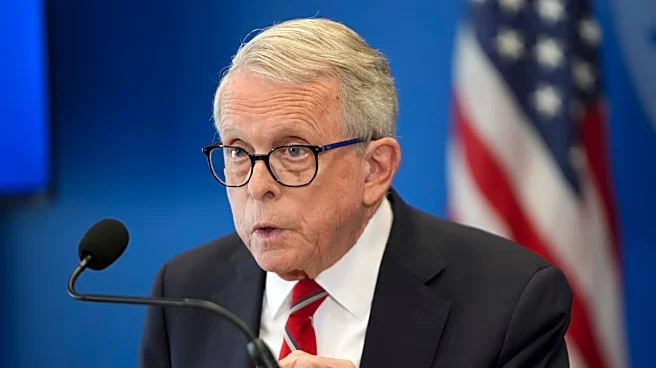
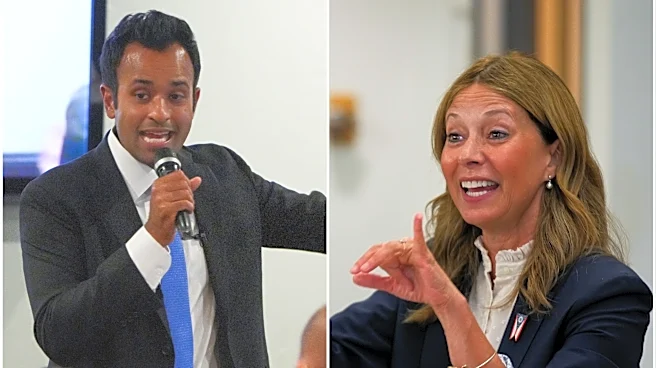
An armed individual lunged at Democrat Amy Acton during a fair in Canfield, Ohio. The incident has prompted responses from Acton, her Republican opponent Vivek Ramaswamy, and Governor Mike DeWine. The event highlights growing concerns regarding the safety
of political figures and the intensity of political discourse. This incident occurred as another Ohio community decided to discontinue its use of Flock Safety cameras, while Covington, Kentucky, is increasing its investment in law enforcement technology. The details surrounding the armed individual's motivations and the specifics of the lunge were not immediately available, but the event has drawn significant attention to the security measures in place at public political appearances.
Why It's Important?
This incident underscores the escalating tensions and potential for violence in the current political climate in the U.S. The direct physical threat to a political candidate, Amy Acton, during a public event raises serious questions about the adequacy of security protocols for individuals in public office or those campaigning. It could lead to a re-evaluation of how political events are organized and secured, potentially increasing costs and limiting accessibility for the public. The differing approaches of Ohio communities regarding surveillance technology, with one discontinuing Flock Safety cameras and another, Covington, Kentucky, doubling down on such technology, reflects a broader national debate on privacy versus security. This event may fuel calls for stricter measures to protect public figures, potentially impacting the nature of political engagement and public interaction with candidates.
What's Next?
Authorities will likely conduct a thorough investigation into the incident involving Amy Acton to determine the full extent of the threat and any underlying motivations. This could lead to potential charges against the individual involved and a review of security procedures for political events in Ohio and potentially nationwide. Political campaigns and event organizers may implement more stringent security measures, which could include increased law enforcement presence, stricter access controls, and enhanced screening protocols for attendees. The responses from Acton, Ramaswamy, and Governor DeWine will be closely watched, as their statements could influence public perception and policy discussions regarding political violence and security. The ongoing debate about surveillance technology, as evidenced by the contrasting decisions in Ohio and Kentucky, is also expected to continue, with this incident potentially adding weight to arguments for increased technological solutions in public safety.
Beyond the Headlines
The incident transcends a simple security breach, touching upon the broader societal implications of political polarization and the normalization of aggressive behavior in public discourse. The act of an armed individual lunging at a political candidate can have a chilling effect on democratic participation, potentially deterring individuals from running for office or engaging in public political activities due to fear for their safety. It also highlights the psychological toll on public figures and their families. Furthermore, the contrasting decisions on surveillance technology in Ohio and Kentucky reflect a deeper philosophical divide in American society regarding the balance between collective security and individual privacy. This event could intensify discussions about the role of rhetoric in inciting violence and the responsibility of public figures and media outlets in fostering a more civil political environment. The long-term impact could be a shift in how political campaigns are conducted, moving towards more controlled and less accessible public interactions, thereby potentially widening the gap between elected officials and the electorate.