



What's Happening?
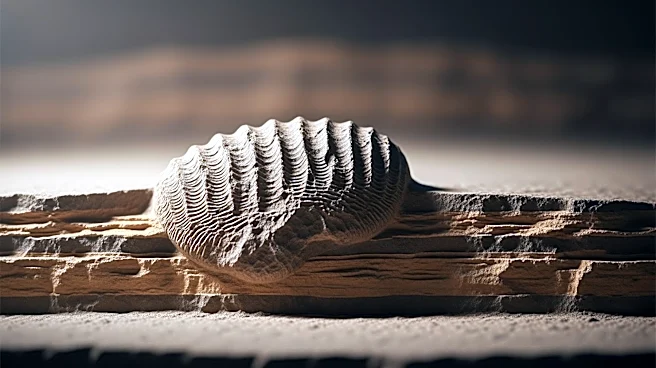
A fossil site in Yunnan province, China, has revealed over 700 fossils dating back 554 to 537 million years, suggesting complex life existed before the Cambrian explosion. The Jiangchuan biota includes bilaterians and deuterostomes, indicating diverse
life forms in the Ediacaran period. This challenges the notion that complex life forms appeared suddenly during the Cambrian explosion, suggesting a more gradual evolution. The fossils include cambroernids and other unique forms, providing evidence of early evolutionary experiments and adaptations.
Why It's Important?
The discovery has significant implications for our understanding of early animal evolution. It suggests that the diversification of complex life forms may have begun earlier than previously thought, challenging the traditional view of the Cambrian explosion as a sudden event. This could reshape our understanding of evolutionary timelines and the development of modern animal body plans. The findings highlight the complexity of early life and the potential for undiscovered evolutionary pathways that contributed to the diversity of life on Earth.
What's Next?
Further studies are needed to explore the biological affinities of these fossils and confirm their classification as early animal forms. This could lead to a reevaluation of the evolutionary timeline and the processes that led to the diversification of life. Researchers may also investigate other fossil sites from the Ediacaran period to uncover additional evidence of early complex life. These efforts could provide new insights into the origins of modern animal groups and the evolutionary pressures that shaped their development.