






What's Happening?
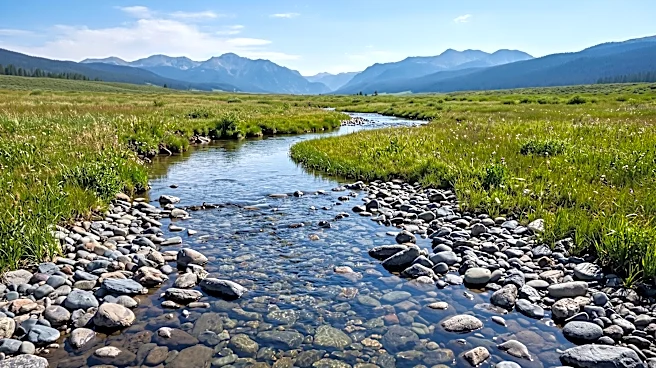
Ranchers in Colorado are partnering with researchers to investigate and manage emerging water quality issues in the Yampa and Gunnison basins. These efforts are driven by increasing stream temperatures and reduced water flows attributed to climate change,
which are causing distress in rivers and lakes, including the appearance of toxic algae blooms. The Colorado Department of Public Health and Environment and Colorado State University are analyzing water quality and evaluating best management practices to protect these vital mountain ecosystems. Philip Rossi, a rancher in the Upper Yampa River Basin, is among the first to allow scientists to monitor irrigation water runoff from his hay meadows. Initial findings indicate that minimal fertilizer from his operations reaches the stream, with non-fertilized grass strips further reducing any impact. This collaborative approach aims to gather real-world data on agricultural impacts on water quality in remote regions, moving towards voluntary conservation efforts rather than strict regulations.
Why It's Important?
This initiative is crucial for the environmental health and economic stability of Colorado's agricultural sector and its pristine natural resources. The research provides data-driven insights into how agricultural practices affect water quality, potentially leading to sustainable solutions that benefit both ranchers and the environment. By demonstrating that best management practices can effectively mitigate pollution, the state hopes to avoid imposing stringent regulations that could burden farmers. This collaborative model fosters trust between agricultural communities and environmental agencies, encouraging broader participation in conservation efforts. The long-term health of these river basins directly impacts local ecosystems, tourism, and the availability of clean water for communities downstream, making these research efforts vital for the state's future resilience against climate change impacts.
What's Next?
Following the positive results of the initial three-year study, a more extensive research effort is underway, involving additional ranches and incorporating the monitoring of stream temperatures. This expansion aims to gather more comprehensive data and further validate the effectiveness of current best management practices. The Colorado Department of Public Health and Environment intends to continue promoting voluntary efforts and sharing successful strategies among ranchers to achieve water quality goals without resorting to heavy-handed regulations. Water agencies in the affected areas are also exploring operational changes to support stream health. Ranchers like Philip Rossi are optimistic that further studies, including those on water temperature, will confirm the minimal impact of their traditional irrigation methods, reinforcing sustainable agricultural practices.
Beyond the Headlines
This collaborative approach highlights a significant shift in environmental management, moving from a potentially adversarial regulatory model to one based on partnership and scientific understanding. It underscores the value of local knowledge, as ranchers' traditional practices are being scientifically validated. The success of this program could serve as a model for other regions facing similar environmental challenges, demonstrating how stakeholders with diverse interests can unite to address complex issues like climate change and water quality. Furthermore, it emphasizes the importance of proactive, data-driven conservation efforts in preserving natural resources, ensuring both ecological integrity and economic viability for future generations. The initiative also subtly addresses the broader narrative of climate change adaptation within the agricultural sector, showcasing practical, on-the-ground solutions.