



What's Happening?
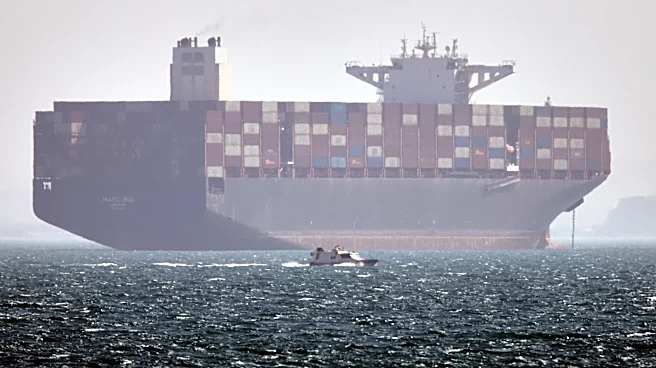
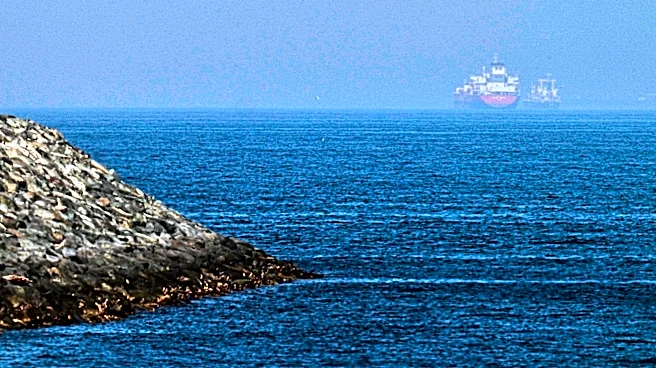
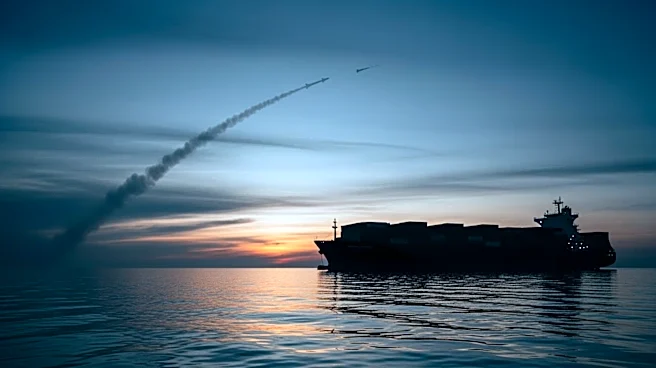
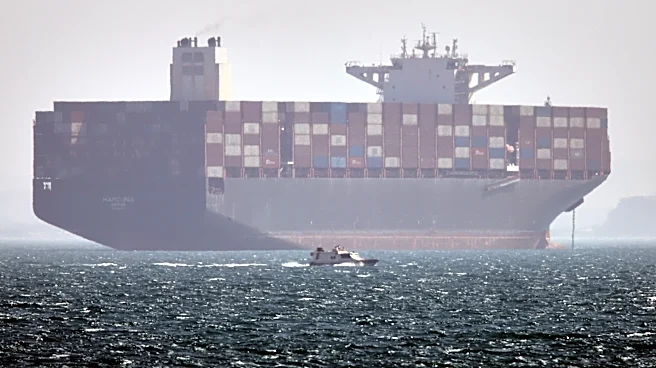
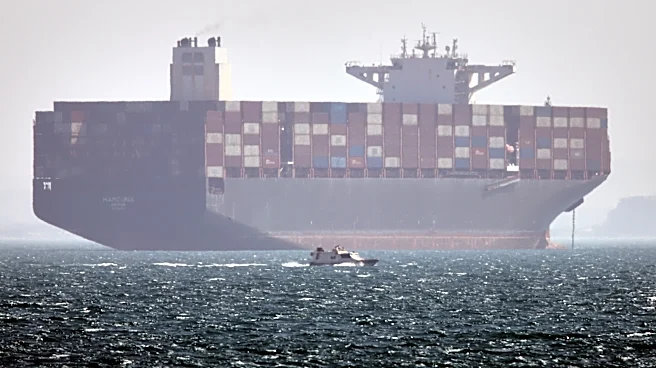
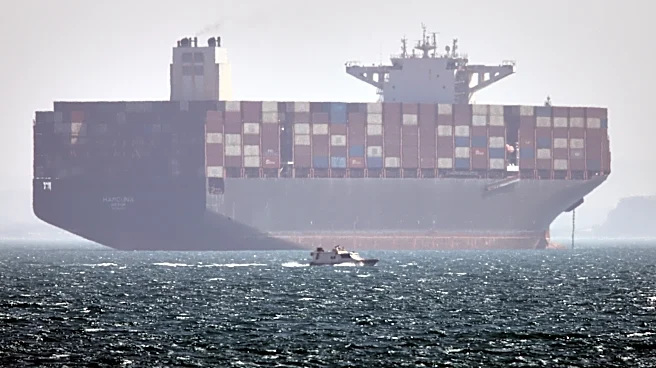
A U.S. official has suggested that the operator of the boxship CMA CGM San Antonio was at fault for a missile strike by Iran in the Strait of Hormuz. The incident occurred despite U.S. military assurances of protection for vessels transiting through Omani
waters. The strike injured eight crewmembers, marking a significant incident in the ongoing conflict. The U.S. military claims the operator did not adhere to Project Freedom's guidelines, which were designed to ensure safe passage. However, CMA CGM asserts it was coordinating with U.S. forces, highlighting a discrepancy in accounts.
Why It's Important?
This incident underscores the complexities and risks associated with maritime navigation in the Strait of Hormuz, a critical chokepoint for global oil shipments. The U.S. military's implication of the operator's fault raises concerns about the effectiveness of U.S. protection measures and could impact the confidence of shipping companies in relying on U.S. military support. The situation also highlights the geopolitical tensions in the region, with potential implications for international trade and energy markets. Shipping companies may need to reassess their security protocols and reliance on military assurances.
What's Next?
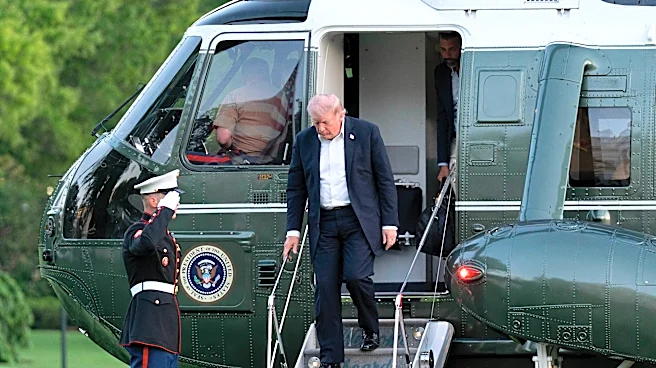
Following the attack, President Trump suspended Project Freedom, a security initiative aimed at protecting vessels in the region. This suspension, requested by Pakistani mediators, is intended to facilitate ongoing negotiations with Tehran. The future of maritime security in the Strait of Hormuz remains uncertain, with potential diplomatic efforts needed to address the underlying tensions. Shipping companies and international stakeholders will be closely watching for developments in U.S.-Iran relations and any changes in maritime security policies.