
What's Happening?
The U.S. House of Representatives has narrowly voted to advance a spending package aimed at ending a brief, partial government shutdown. The procedural measure was approved with a 217 to 215 vote after
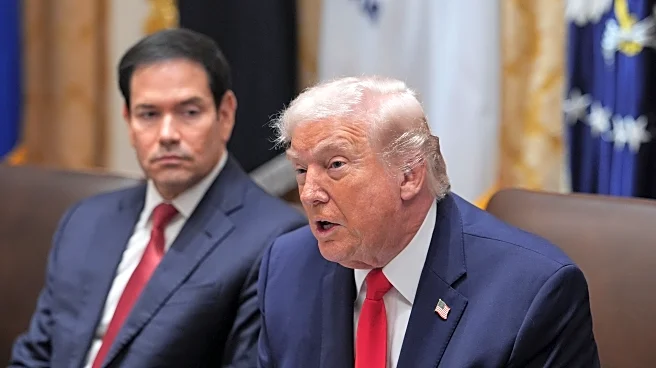
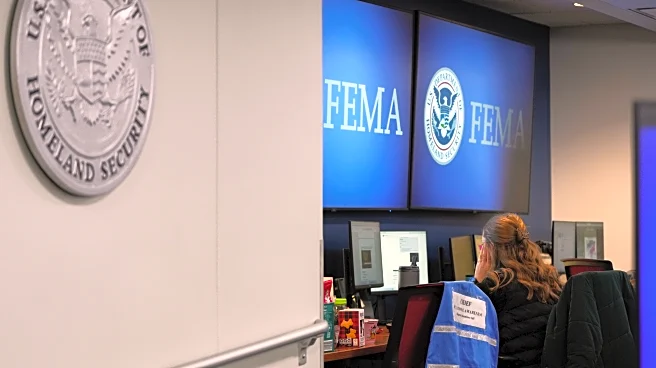
President Trump endorsed the package, which he negotiated with Senate Democrats. The agreement funds most of the government, including the Departments of Defense, Health and Human Services, Housing, and Transportation, through the end of September. However, funding for the Department of Homeland Security (DHS) is only extended through February 13. This short-term agreement was reached after Democrats refused to approve annual funding without restrictions on immigration enforcement tactics, following incidents involving federal officers. The House vote sets up a final decision later in the day, potentially sending the over $1 trillion legislation to the president's desk.
Why It's Important?
The resolution of this partial government shutdown is crucial as it impacts various federal departments and their operations. The shutdown had resulted from disagreements over immigration policies, particularly concerning the Department of Homeland Security. The temporary funding extension for DHS highlights ongoing tensions and the need for further negotiations on immigration enforcement policies. The shutdown's resolution is significant for maintaining government operations and avoiding disruptions in services. Additionally, the agreement reflects the complex dynamics between the executive branch and Congress, as well as within the parties themselves, particularly among Republicans who had to rally support to advance the bill.
What's Next?
The short-term extension for DHS funding indicates that further negotiations are imminent. Lawmakers have a narrow window to address policy changes for DHS before the new deadline. Key issues include immigration enforcement tactics and the potential for bipartisan consensus on measures like mandating body-worn cameras. However, other proposals, such as forbidding officers from hiding their identities and requiring judicial warrants for enforcement operations, face opposition. The outcome of these negotiations will determine the future of immigration policy and funding for DHS. Additionally, the potential for another short-term funding bill looms, as indicated by Senate Majority Leader John Thune and other Republicans.