
What's Happening?
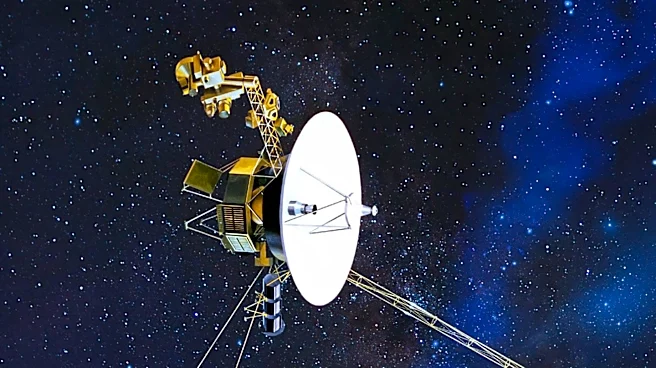
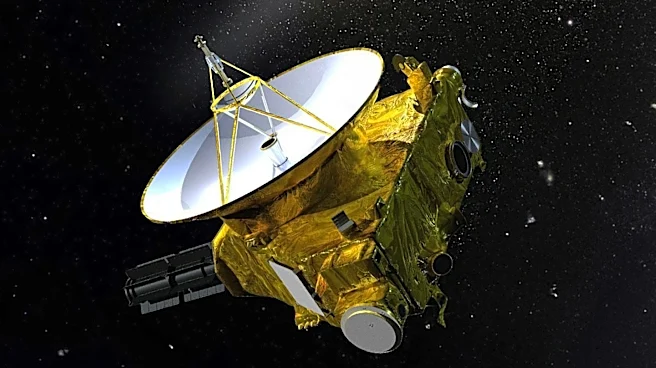
Researchers at the Southwest Research Institute (SwRI) are developing a solar wind forecasting method to predict when the New Horizons spacecraft will encounter the termination shock, the outer boundary
of the heliosphere. This boundary is dynamic, expanding and contracting with solar activity. The New Horizons probe, which previously conducted a historic flyby of Pluto and a Kuiper Belt Object, is now heading towards interstellar space. The research, published in The Astrophysical Journal and Advances in Space Research, combines solar wind forecasting with heliosphere models to determine the location of the termination shock. The study aims to prepare for data collection as New Horizons approaches this boundary, which could occur between 2029 and 2040.
Why It's Important?
This research is significant as it enhances our understanding of the heliosphere's boundaries, which protect the solar system from cosmic radiation. By predicting when New Horizons will reach the termination shock, scientists can optimize data collection, providing insights into the interaction between solar wind and the interstellar medium. This knowledge is crucial for future space missions and could inform the design of spacecraft capable of withstanding interstellar conditions. The findings also contribute to our understanding of space weather, which can impact satellite operations and communication systems on Earth.
What's Next?
As New Horizons continues its journey, researchers will monitor solar activity and adjust their models to refine predictions of the termination shock encounter. The SwRI team will likely collaborate with other space agencies to share data and insights, potentially leading to new missions exploring the heliosphere's boundaries. The scientific community will be keenly observing the data collected by New Horizons as it approaches and possibly crosses the termination shock, offering a rare opportunity to study this region in detail.