



What's Happening?
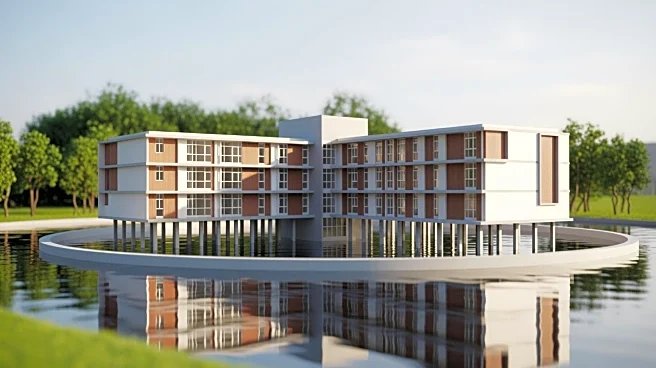
A newly constructed high school in Washington has successfully demonstrated its flood-resistant design during its first major test. The school, organized into Small Learning Communities (SLCs), consists of seven interconnected buildings that incorporate
biophilic design principles to create a student-centered environment. The 358,000 square foot facility is designed to adapt to changing educational methods, moving away from traditional centralized school models. The SLCs include various classrooms, flexible spaces, and collaboration areas, promoting peer relationships and personalized learning experiences. The school also features three commons areas for dining and socializing, a Career and Technical Education area, and a library with advanced facilities for research and interdisciplinary activities.
Why It's Important?
The successful performance of the flood-resistant design highlights the importance of innovative architectural solutions in educational infrastructure, particularly in areas prone to natural disasters. This approach not only ensures the safety and continuity of education during adverse weather conditions but also enhances the learning environment by fostering collaboration and adaptability. The design serves as a model for future educational facilities, emphasizing the need for resilience and flexibility in school construction. By integrating nature and technology, the school sets a precedent for creating sustainable and engaging learning spaces that can evolve with educational trends.