

What's Happening?
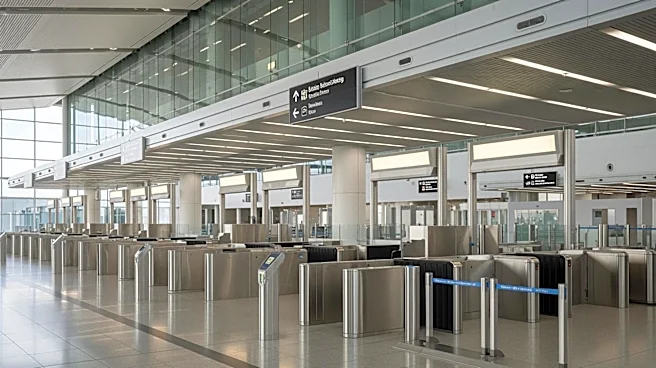
A traveler at Lisbon's Humberto Delgado Airport missed a flight to Marrakech due to excessively long security lines, despite arriving over two hours before departure. The traveler, who was flying on a business class fare, encountered a massive queue at passport
control, which took significantly longer than expected to clear. Despite attempts to alert airport staff about the impending flight departure, the traveler and several others were unable to reach the gate in time. As a result, the airline, TAP Air Portugal, required the traveler to purchase a new ticket for a later flight, as European airlines typically do not rebook passengers for free in such situations.
Why It's Important?
This incident highlights the challenges faced by travelers due to airport inefficiencies and the stringent policies of European airlines. The requirement for passengers to purchase new tickets when missing flights due to factors beyond their control, such as long security lines, underscores the lack of flexibility in airline policies. This situation can lead to significant financial burdens for travelers and raises questions about customer service standards in the aviation industry. The incident also points to potential systemic issues at airports, where inadequate staffing or poor management of security lines can disrupt travel plans.
What's Next?
Travelers may need to adjust their travel plans by arriving even earlier at airports known for long security lines, especially in Europe. Airlines and airports might face increased pressure to improve communication with passengers regarding potential delays and to reconsider policies that penalize travelers for circumstances beyond their control. Additionally, there could be calls for regulatory changes to protect consumers from such situations, ensuring fair treatment and compensation when travel disruptions occur due to airport inefficiencies.
Beyond the Headlines
The incident raises broader questions about the balance of responsibility between airlines and airports in ensuring smooth travel experiences. It also highlights the potential for increased traveler anxiety and dissatisfaction, which could impact the reputation of airlines and airports. Furthermore, the situation may prompt discussions about the need for more consumer-friendly policies in the aviation industry, particularly in Europe, where current practices can be seen as punitive.