


What's Happening?
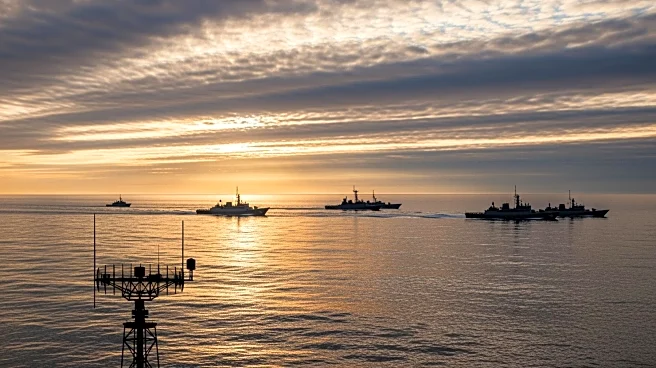
China has launched joint military drills around Taiwan, involving air, navy, and rocket troops. These exercises are a response to what China perceives as external interference, particularly following a major U.S. arms sale to Taiwan and comments from
Japan's prime minister about potential military involvement. The drills, which include live-fire exercises, are intended as a stern warning against Taiwanese independence and external forces. Taiwan has placed its forces on high alert, conducting rapid response exercises. The drills have disrupted international air travel, affecting over 100,000 travelers due to flight cancellations and diversions.
Why It's Important?
These military drills highlight the increasing tensions in the Taiwan Strait, a critical area for international trade and regional security. The U.S. arms sale to Taiwan, if approved, would be the largest ever, further complicating U.S.-China relations. China's actions are a demonstration of its military strength and a message to both Taiwan and its international supporters. The drills could lead to heightened military presence and potential confrontations in the region, impacting global economic and security interests. The situation underscores the fragile balance of power in the Indo-Pacific and the potential for conflict.
What's Next?
The military drills are set to continue, with further exercises planned. Taiwan's defense forces remain vigilant, and the international community is closely monitoring the situation. The U.S. Congress will need to decide on the arms deal, which could further escalate tensions. Diplomatic efforts may be necessary to prevent a military confrontation and maintain regional stability. The situation also raises questions about the future of Taiwan's status and the role of international actors in the region.