





What's Happening?
Saudi Arabia has launched a new package of humanitarian and charitable projects for the Yemeni people through the King Salman Humanitarian Aid and Relief Center (KSrelief). The launch occurred during a visit by Chairman of Yemen’s Presidential Leadership
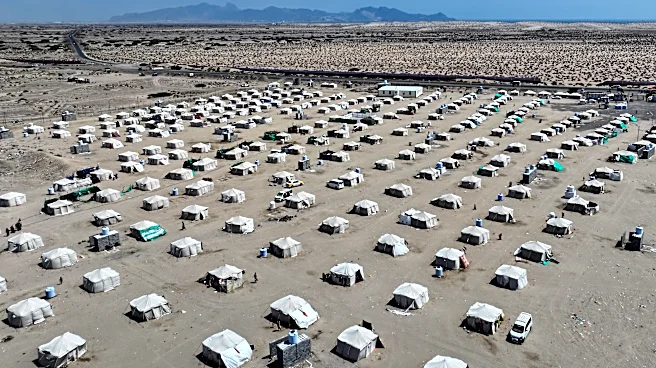
Council Dr. Rashad Al-Alimi to KSrelief headquarters in Riyadh. Dr. Al-Alimi expressed gratitude for Saudi Arabia's assistance, which has reached various regions and segments of Yemeni society without discrimination. KSrelief Supervisor General Dr. Abdullah bin Abdulaziz Al Rabeeah highlighted that Yemen remains KSrelief’s top priority, with 1,238 projects implemented in Yemen totaling over $4.8 billion, in cooperation with 362 UN, international, and local organizations. The new projects include distributing 250,000 food baskets, providing emergency shelter kits and tents, supplying safe drinking water to displaced people in several governorates, and delivering essential medicines and medical supplies. Additionally, 100 volunteer programs across Yemen are expected to benefit 265,000 people, covering specialized medical services and economic empowerment.
Why It's Important?
This new package of humanitarian projects is critically important for alleviating the severe humanitarian crisis in Yemen, which has been exacerbated by ongoing conflict. The comprehensive nature of the aid, covering food security, shelter, water, sanitation, health, and specialized medical services, addresses multiple urgent needs of the Yemeni population. For the U.S., which has a vested interest in regional stability and humanitarian welfare, these efforts by Saudi Arabia contribute to mitigating a major humanitarian catastrophe. The involvement of numerous UN and international organizations in partnership with KSrelief underscores a coordinated international response, which is crucial for effective aid delivery in complex environments. The focus on long-term initiatives like mine clearance and economic empowerment also suggests a commitment to rebuilding and fostering resilience in Yemen, which aligns with broader international goals for post-conflict recovery.
What's Next?
The immediate next steps involve the implementation and distribution of the newly launched aid projects across Yemen. This includes the delivery of food baskets, shelter, water, and medical supplies to the specified governorates and beneficiaries. The 100 volunteer programs, encompassing specialized medical and training initiatives, will also commence, aiming to provide direct services and capacity building. KSrelief will continue its coordination with UN, international, and local organizations to ensure efficient and widespread reach of the aid. The ongoing challenges posed by the Houthi militia, such as blocking access and targeting aid, will likely require continued advocacy from the international community to ensure humanitarian corridors remain open and aid workers are protected. Monitoring and evaluation of these projects will be crucial to assess their impact and adapt future interventions.
Beyond the Headlines
Beyond the immediate relief, this initiative highlights the complex interplay of humanitarian aid and geopolitical dynamics in the region. Saudi Arabia's significant investment in Yemeni aid, totaling over $29 billion in the past decade, positions it as a major humanitarian actor in the conflict. The emphasis on projects for women and children, as well as specialized initiatives like mine clearance and reintegration of children formerly associated with armed conflict, points to a recognition of the multifaceted and long-term impacts of the conflict. The call by Dr. Al Rabeeah for the UN and international community to pressure the Houthi militia to open humanitarian corridors underscores the political obstacles that often impede humanitarian efforts. This situation also brings to light the ethical considerations of aid delivery in conflict zones, where humanitarian principles of neutrality and impartiality can be challenged by political realities and security concerns.