







What's Happening?
School gardens are being recognized as valuable educational tools that enhance science learning and agricultural literacy among students. Historically, agriculture was a part of daily life for most Americans, but today, many are several generations removed
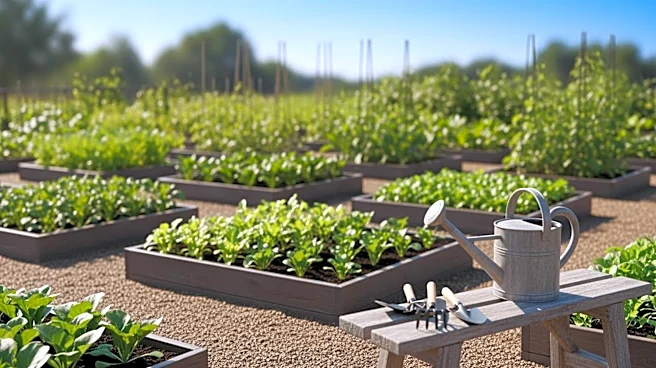
from farming. As a result, there is a growing gap in agricultural knowledge. School gardens help bridge this gap by providing hands-on learning experiences that engage students with science and nature. These gardens serve as living laboratories where students can experiment with variables such as water, temperature, and sun exposure, thereby improving their science process skills. Additionally, gardening fosters life skills like teamwork, patience, and responsibility. Despite their benefits, school gardens face challenges such as funding, space, and aesthetic concerns, which can deter their implementation.
Why It's Important?
The integration of school gardens into educational curricula is significant as it addresses the growing disconnect between students and agriculture. By engaging students in gardening, schools can enhance science literacy and promote positive attitudes toward the environment. This hands-on approach to learning is more engaging than traditional classroom settings, leading to better understanding and retention of scientific concepts. Furthermore, school gardens encourage healthier eating habits, as students are more likely to consume vegetables they have grown themselves. However, the challenges of funding, space, and maintenance need to be addressed to ensure the successful implementation of these programs. Overcoming these hurdles can lead to a more agriculturally literate society, better equipped to make informed decisions about food and environmental issues.
What's Next?
For school gardens to become a staple in education, schools and communities need to address the challenges of funding and space. This may involve seeking grants or community partnerships to support garden projects. Additionally, training teachers to feel confident in using gardens as educational tools is crucial. Schools may also need to rethink their approach to aesthetics, recognizing that the 'messiness' of a garden is part of the learning process. By fostering a supportive environment for school gardens, educational institutions can ensure that students continue to benefit from these valuable learning experiences.
Beyond the Headlines
Beyond the immediate educational benefits, school gardens have the potential to foster a deeper appreciation for agriculture and the food supply among students. By understanding the complexities of growing food, students can develop a greater respect for farmers and the challenges they face. This awareness can lead to more informed food choices and a better understanding of the economic and political issues surrounding agriculture. In the long term, school gardens can contribute to a more sustainable and food-secure future by cultivating a generation that values and understands the importance of agriculture.