



What's Happening?
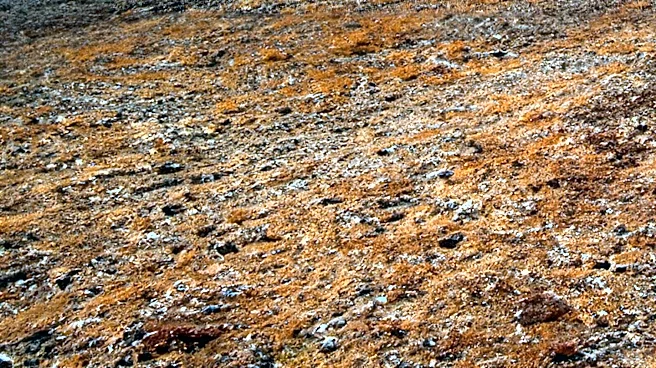
Archaeologist Scott Dersam has unearthed significant evidence of Clovis people inhabiting the high-altitude Beartooth Mountains near Yellowstone National Park approximately 13,000 years ago. This discovery contradicts prevailing scientific understanding,
which suggested that early humans primarily resided at lower elevations during that period, when the mountains were believed to be covered in ice. Dersam's findings include multiple sites with Clovis artifacts, notably a subsurface Clovis point found within an ancient hearth, indicating sustained human presence rather than isolated occurrences. The 2022 floods in Greater Yellowstone played a crucial role in exposing these previously buried artifacts, leading to an explosion of discoveries. Dersam, who runs the nonprofit Alpine Ecosystems Research Institute (AERI), focuses on 'off-site archaeology,' minimizing disturbance by primarily documenting findings and removing only surface artifacts that might otherwise be taken by collectors. His work also involves soil testing to reconstruct ancient plant communities and determine when the soil was last exposed to sunlight, further challenging existing glaciology models for the region.
Why It's Important?
This archaeological breakthrough is important because it fundamentally challenges long-held paradigms regarding early human migration and adaptation in North America. The presence of Clovis sites in a high-alpine environment, previously thought to be uninhabitable due to extensive glaciation, suggests a more complex and resilient picture of prehistoric human behavior. It implies that early inhabitants possessed advanced survival strategies, potentially utilizing unique ecological niches or pathways through glacial landscapes. This re-evaluation could lead to a broader understanding of how early Americans interacted with diverse ecosystems and adapted to challenging climatic conditions. Furthermore, the findings highlight the dynamic nature of archaeological discovery, often influenced by natural events like floods, and underscore the importance of continued exploration in areas previously deemed archaeologically barren. The work also emphasizes the evolving relationship between archaeologists and Indigenous communities, with Dersam actively seeking tribal input and support, aiming to conduct research respectfully and avoid past exploitative practices.
What's Next?
The immediate next steps involve extensive lab testing of the unearthed artifacts and soil samples to precisely date the findings and gather more detailed environmental data. Dersam plans to submit his research for peer review and publication in scientific journals, with an anticipated presentation at an upcoming Paleoamerican Odyssey conference. This will allow the broader scientific community to scrutinize and integrate these new findings into existing knowledge. Continued fieldwork in the Beartooth Mountains is also expected, as Dersam believes there are decades of work remaining in the region. The findings could prompt other archaeologists to re-examine high-altitude environments across North America, potentially leading to similar discoveries and a more comprehensive understanding of early human presence on the continent. The ongoing collaboration with tribal historic preservation officers and elders will also be crucial in ensuring the research is conducted ethically and respectfully.
Beyond the Headlines
Beyond the immediate scientific implications, Dersam's discoveries carry deeper cultural and philosophical significance. The notion that early humans not only survived but thrived in such extreme environments challenges the modern perception of 'wilderness' as untouched by human presence. It reinforces the Indigenous perspective that humans have always been an integral part of these landscapes, actively shaping and maintaining their health for millennia. This perspective contrasts with legal definitions of wilderness that often exclude human interaction. The findings also highlight the ethical considerations in archaeology, particularly concerning the respectful treatment of ancient sites and human remains, as exemplified by the reburial of Anzick-1. Dersam's methodology of 'off-site archaeology' and his engagement with tribal communities represent a shift towards more collaborative and less intrusive research practices, fostering a more inclusive understanding of history. The long-term implications could influence land management policies and conservation efforts by recognizing the deep historical connection between humans and these high-alpine ecosystems.